BlogNLP
BlogNLP是一款专为内容创作和SEO优化设计的AI写作工具,支持多语种生成、智能大纲、模板库与AI润色。
ChatLaw is an open-source Chinese legal AI model developed by a team from Peking University, focusing on efficient and intelligent document generation and legal question-and-answer assistance for Chinese legal practice.
 ChatLaw
On June 20, 2024, the Peking University team released ChatLaw, which has become a new heavyweight tool for digitalization and AI-powered office work in the legal industry.ChatLaw is designed specifically for the Chinese legal environment, combining the advantages of open source, knowledge graphs, and multi-agent collaboration to promote the intelligentization of office processes such as legal case analysis, document writing, and knowledge retrieval. Completely free and open source, it is suitable for lawyers, corporate legal departments, developers, and general users, helping the legal industry reduce costs, increase efficiency, and achieve digital transformation.
June 20, 2024 – ChatLaw, a large-scale legal model developed by a team led by Peking University, has officially become a key component of the legal industry's digital upgrade and...AI office toolsHeavyweight newcomer to the trackWith the large-scale application of artificial intelligence across various industries, the legal field is also ushering in a revolution driven by big data models. ChatLaw, known for its open-source nature, professionalism, and practicality, is dedicated to providing efficient, intelligent, and reliable legal services for legal professionals, corporate legal departments, and the general public. This report will provide a detailed analysis of its advantages, functions, application methods, and applicable users, and will use checklists and tables to give readers a comprehensive understanding of this new-era AI office tool.
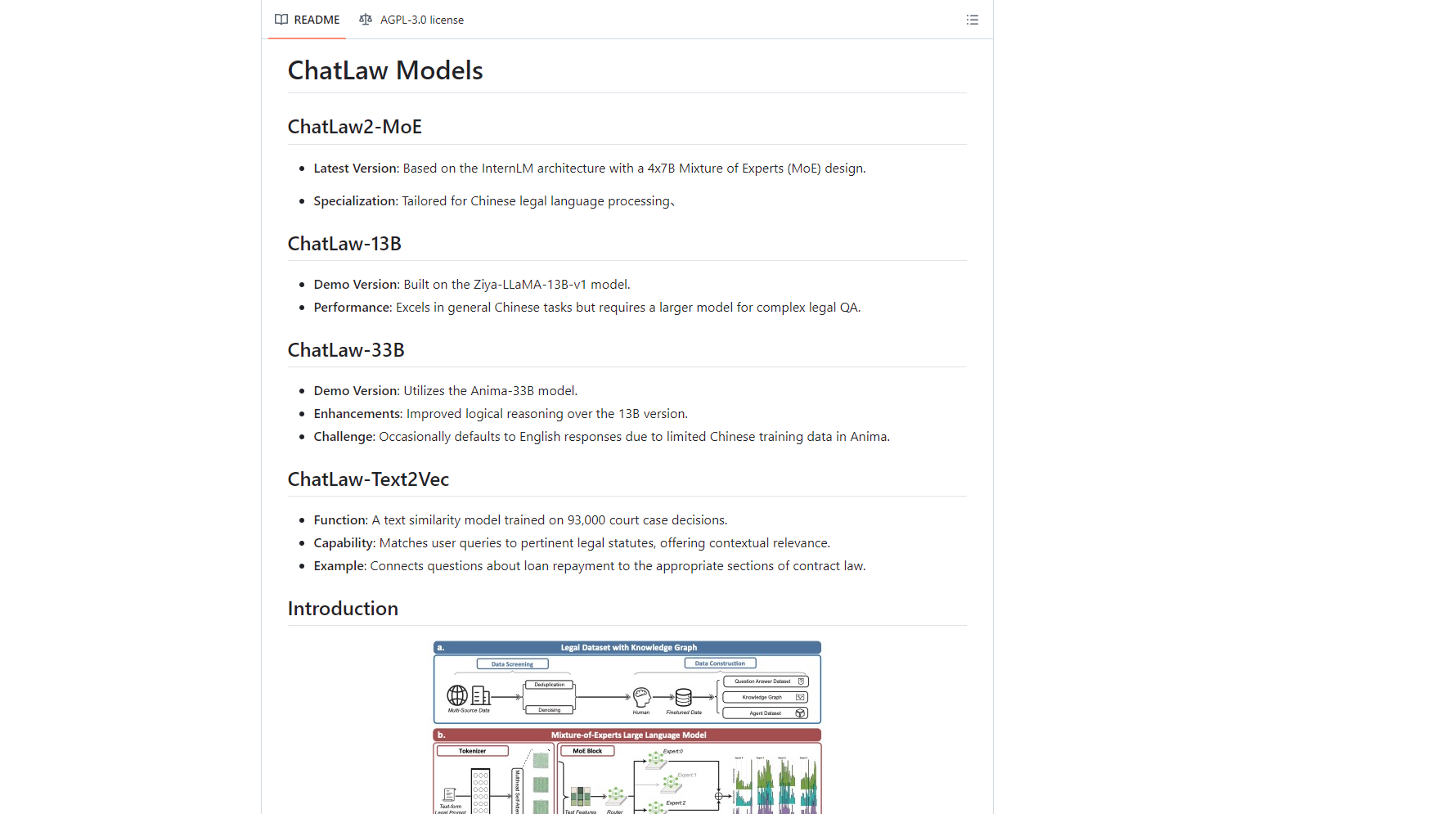
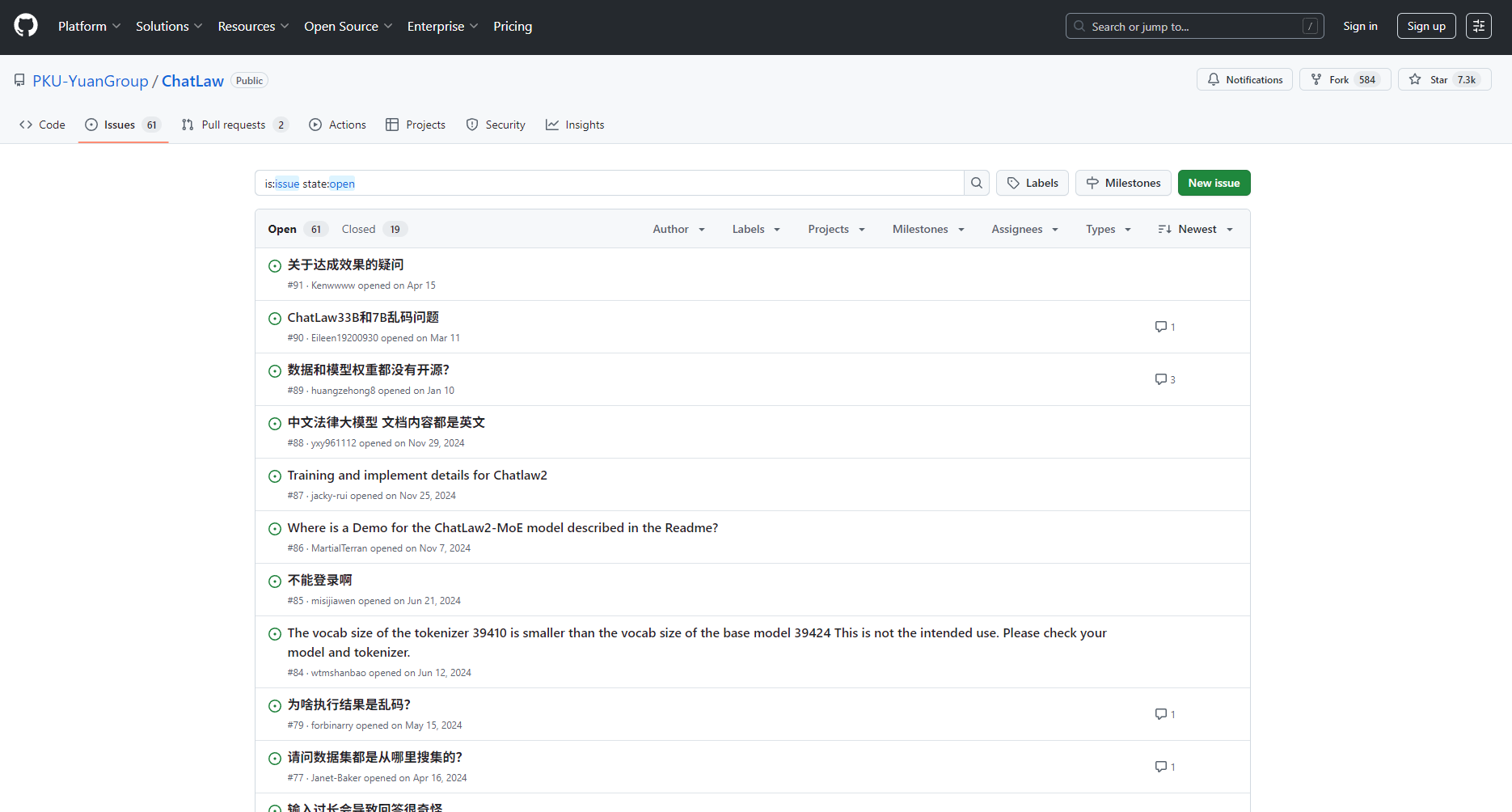
The ChatLaw open-source platform address is:https://github.com/PKU-YuanGroup/ChatLawThe research team, leveraging its strong legal expert resources, rich legal text corpora, and diverse knowledge graph technology, has developed ChatLaw into a forward-looking intelligent office assistant that closely reflects the Chinese legal practice environment.
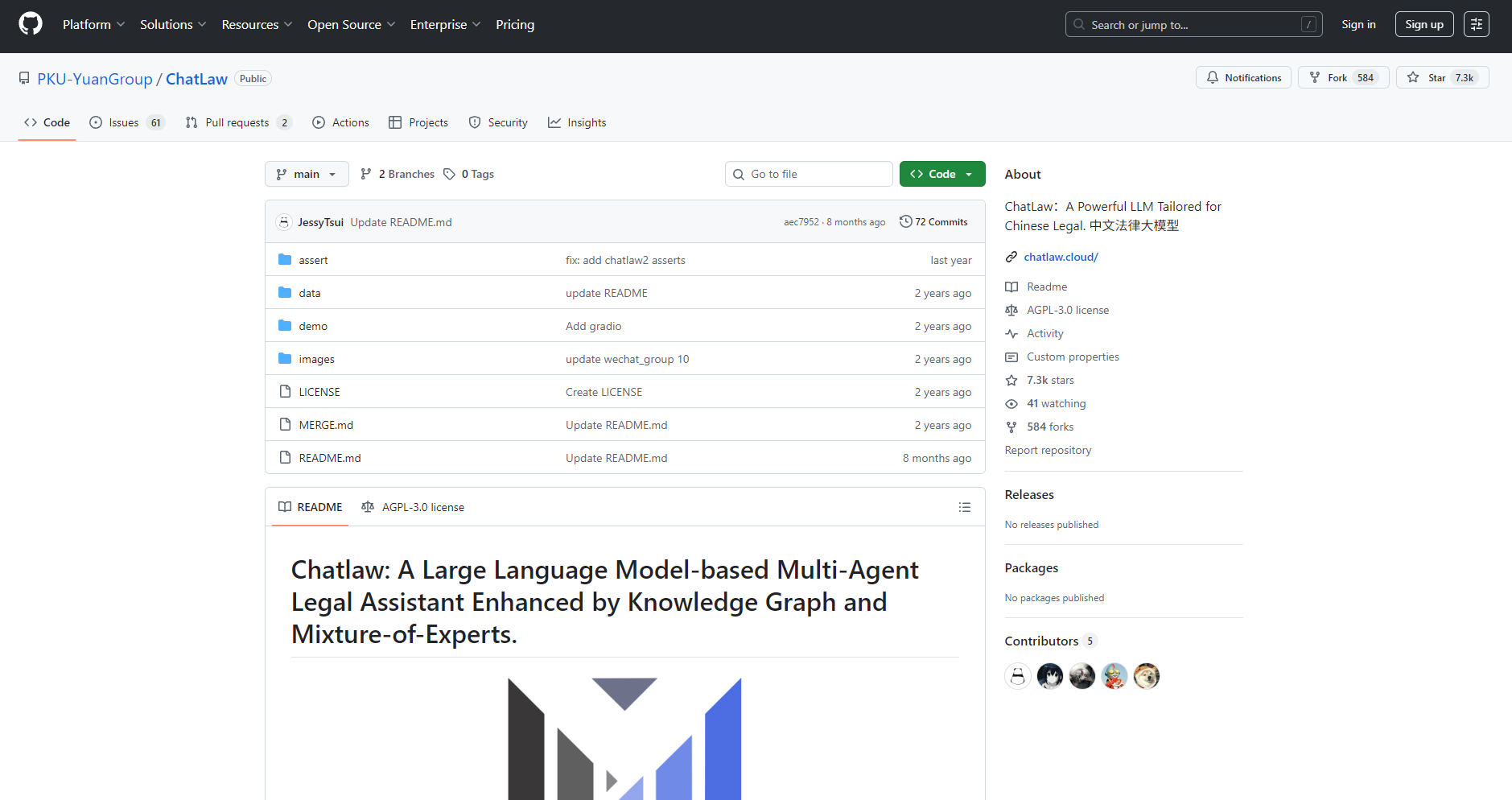
ChatLaw is designed as a large-scale Chinese legal model based on multi-agent collaboration, focusing on handling Chinese legal terminology and the local regulatory environment. Its core functions include:
| Functional categories | ChatLaw application | Traditional legal search / AI Q&A | Innovation Advantages |
|---|---|---|---|
| Legal text interpretation | MoE Legal Big Data Model and Knowledge Graph | General AI Model | Focusing on Chinese law, embedding prior knowledge |
| Structured fact extraction | One-click mind mapping, automatic fact sorting | Hand sorting | Automated, visual analysis, and high consistency |
| Document Writing and Advice | Million-level corpus training, high-dimensional professional document generation | Templates or human writing | Intelligent summarization, highly professional |
| Legal provisions retrieval and matching | Based on the text similarity correspondence of judicial documents | Simple keyword search | Excellent semantic reasoning ability |
| Error rate / hallucination rate | SOP processes are strictly controlled. | Relying on the general-purpose capabilities of AI | The problem of legal AI illusion has been significantly reduced. |

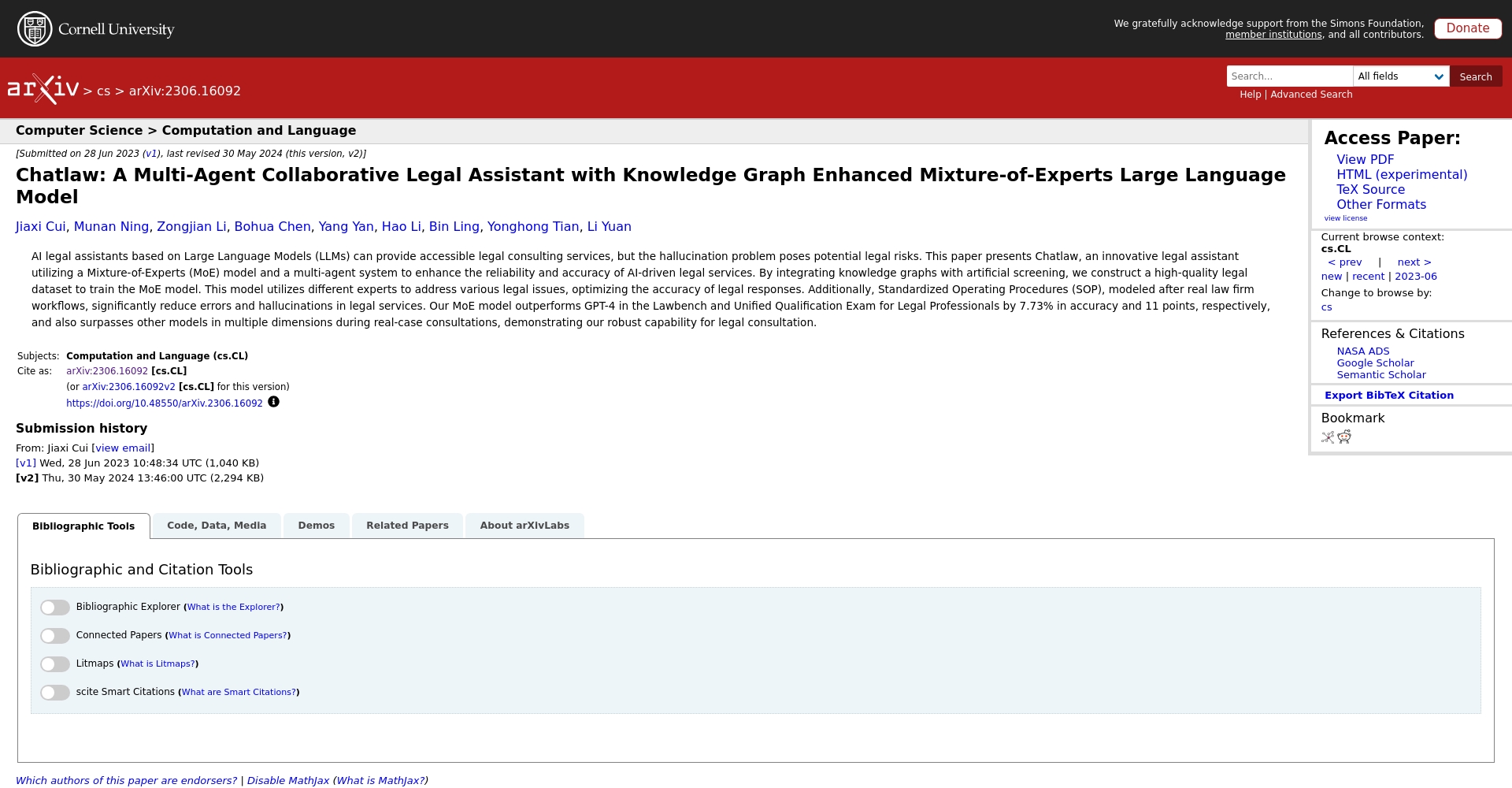
For a detailed understanding of ChatLaw's architecture and innovative principles, please click [here].Read the official ChatLaw paper。
Open source solutions and licensing information
ChatLaw, an open-source AI office tool, is currently completely free for individual and organizational users and is licensed under the AGPL-3.0 open-source license.Users can download the source code, model weights, and related toolkits for free on the GitHub platform, and perform secondary development or deployment in their internal environment in accordance with the terms of the agreement.
| Scheme type | Scope of application | cost | Scale adaptation | Remark |
|---|---|---|---|---|
| Open source individuals | Personal/Research | free | 1-10 people | Fully open source |
| Enterprise self-deployment | Corporate/Law Firm | free | 10+ people | Compliant with AGPL-3.0 license |
| Commercial customization | Third-party developers | Contact the team for a quote | No limit | The agreement must be followed and the source of the software must be clearly indicated. |
Currently, the ChatLaw team is also advancing the commercial ecosystem for enterprise-level scenarios, which you can follow.ChatLaw Cloud Official WebsiteLearn about the latest deployments and payment plans. For example, enterprise-grade SaaS services and API access will be launched in the future.
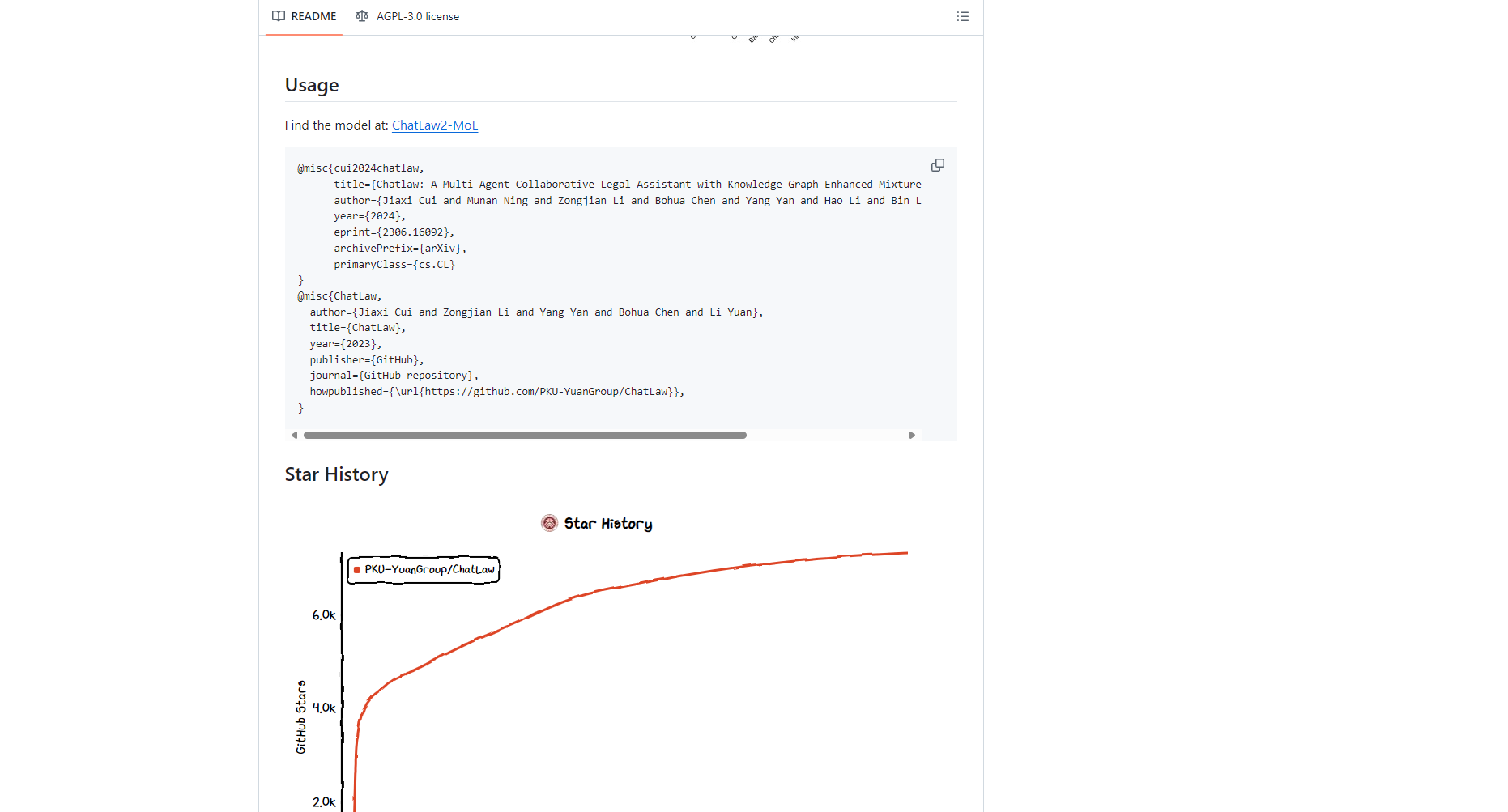
ChatLaw's open-source nature means that users can easily get started, customize, and integrate it into their own workflows.The following are the main use cases and steps for ChatLaw:
For detailed operating procedures and technical support, please see [link/reference].ChatLaw User Guide。
ChatLaw is geared towards legal and related professionals across multiple levels and fields, and is particularly suitable for the following user groups:
| User Categories | Main requirements | ChatLaw Advantages |
|---|---|---|
| Lawyer/Legal Affairs | Case analysis and document writing | Automation and high consistency |
| Enterprises/Institutions | Legal management and contract review | High efficiency and compliance |
| Technology developers | AI tool integration and platform development | The model is flexible and open. |
| Individual/Student | Legal consultation, learning, and document generation | One-stop, free |
ChatLaw employs a high-level large language model architecture, fully integrating knowledge graphs and multi-agent collaboration mechanisms.Currently, the mainstream ChatLaw model versions include:
Technical architecture highlights:
ChatLaw uses a specially designedCustomized large-scale models and knowledge graphs in the Chinese legal fieldCompared to general AI office tools (such as general GPT-like assistants), it is better able to understand professional legal terminology and Chinese legal contexts, and its performance and accuracy are far superior, greatly alleviating the industry pain point of the illusion of legal AI.
ChatLaw itself isOpen source tools for local deploymentData is entirely managed by the user. Deploying the service locally or in a private cloud environment maximizes the privacy and security of cases and materials. For cloud services, it is recommended to choose encrypted transmission and pay attention to the platform's data compliance policy.
Very suitableChatLaw contains a large number of past bar exam questions, case studies, and legal knowledge points, which can help candidates practice questions and review cases. It is also used by law professors in universities for course interaction and case analysis, thus improving the level of intelligence in legal education.
Driven by breakthroughs in legal technology and innovative applications of AIChatLaw is becoming an important driving force for the digital and intelligent transformation of China's legal system.With the continuous growth of the open-source community and its deeper integration with enterprise applications, ChatLaw is expected to drive the development of intelligent legal office tools in China to a new level. For more information on ChatLaw, including downloads and usage, please visit [website address].GitHub HomepageThis marks the beginning of a new journey in intelligent legal office work.
This site's AI-powered navigation is provided by Miao.ChatLawAll external links originate from the internet, and their accuracy and completeness are not guaranteed. Furthermore, AI Miao Navigation does not have actual control over the content of these external links. As of 5:21 PM on September 25, 2025, the content on this webpage was compliant and legal. If any content on the webpage becomes illegal in the future, you can directly contact the website administrator for deletion. AI Miao Navigation assumes no responsibility.