Elon Musk officially launches Grokipedia: In-depth analysis of the most noteworthy AI knowledge encyclopedia tool of 2025.
Musk officially launchedGrokipediaOpenAIA new era of knowledge encyclopedia. Developed by xAI, this system combines Grokl LLM, real-time data connectivity, and community AI co-review.Completely innovate the knowledge production collaboration modelThis aims to provide users with a more timely, impartial, and interactive multilingual knowledge platform.In-depth analysis of Grokipedia's core technological highlights, major differences from Wikipedia, innovative application scenarios, and future growth potential.This is an authoritative interpretation that AI/knowledge industry practitioners and learners should not miss in 2025.
Grokipedia's Birth Background and Positioning
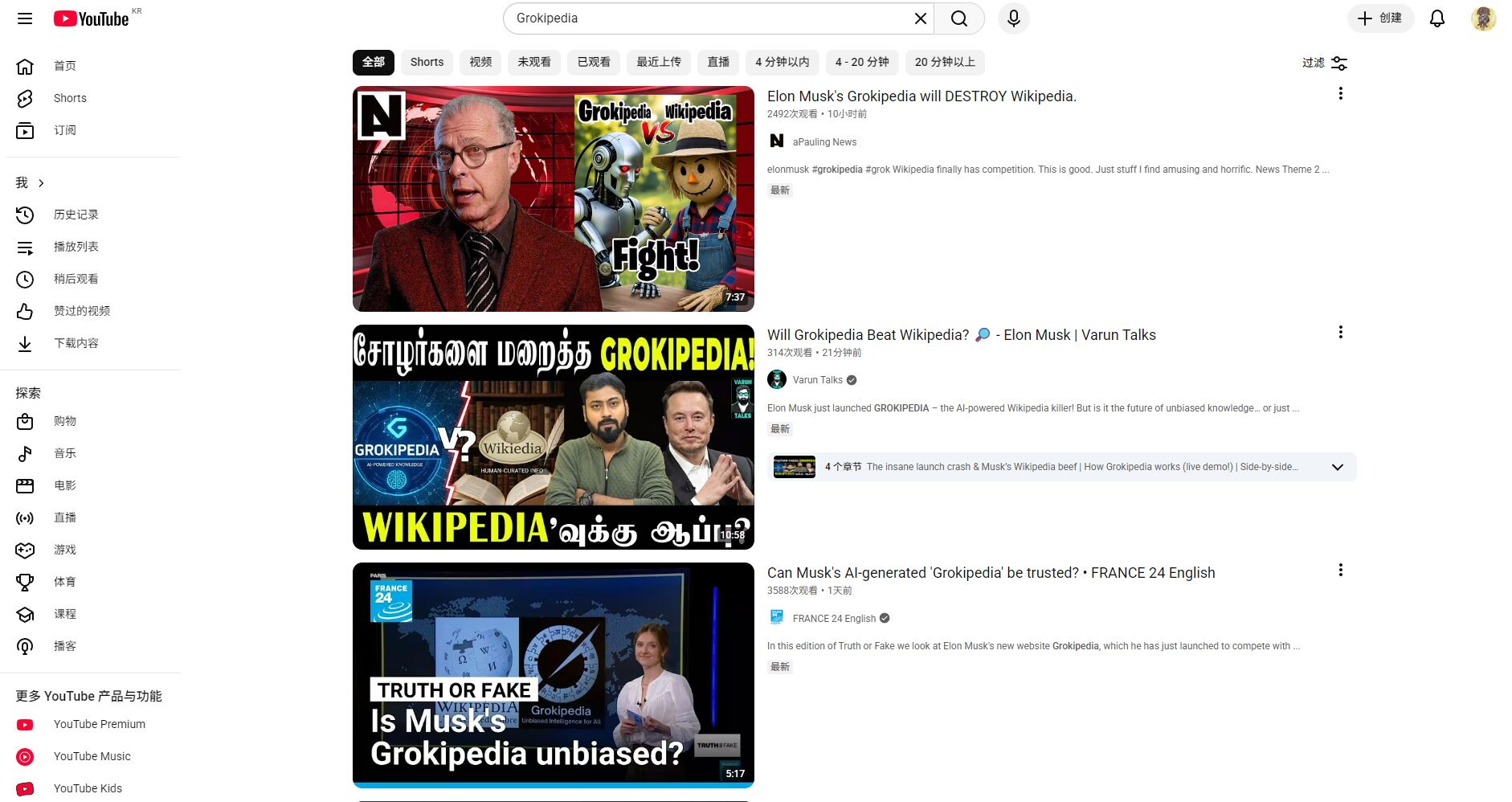
Since ChatGPT emerged in 2023, major tech giants have been vying to develop AI content platforms.Musk officially launched GrokipediaThis move is aimed at responding to an unprecedented need for the "truth" of knowledge collaboration. Grokipedia is led by xAI (an AI company founded by Elon Musk in 2023) and combines Grok's large-scale language model (…).View Grok informationIt was created to address issues of "global knowledge bias," the timeliness of content, and diverse perspectives.
Musk publicly stated that Grokipedia is not simply a copy of the Wikipedia model, but rather, driven by AI, it adheres to the principles of "truthfulness, fairness, and timeliness" to create the next generation of global knowledge encyclopedia. Unlike traditional encyclopedia websites where content is maintained by volunteers, Grokipedia uses cutting-edge AI to directly participate in content generation, review, and verification, significantly reducing human bias and outdated content.
Technical architecture and key highlights
Generative AI content production
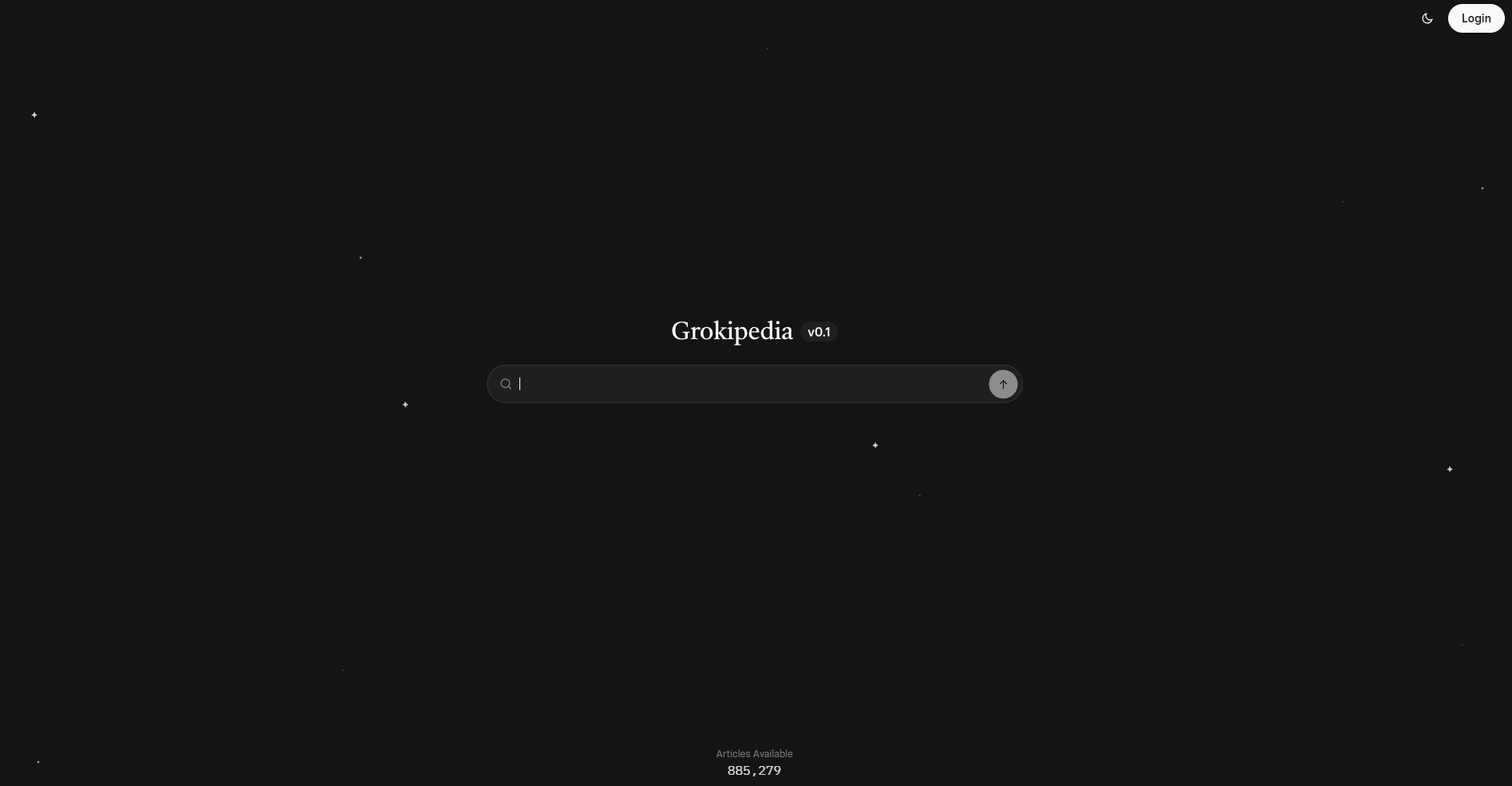
Grokipedia's most distinctive feature is that it automatically generates article content entirely based on a generative AI language model (Grok LLM). Currently, the 0.1 public beta version has added over 885,000 articles per day. All new knowledge is automatically generated by Grok and quickly responds to global trending topics. For example, after a technology event occurs, Grokipedia can provide a detailed explanation and factual summary within minutes, much faster than the traditional encyclopedia update cycle.
Featured List: Grokipedia's Generative AI Content Advantages
| Advantages | instruction |
|---|---|
| Intelligent real-time | Automatically generating content based on global hot topics and trends, far exceeding the efficiency of traditional encyclopedias. |
| Multilingual support | AI can automatically translate and generate multilingual articles. |
| Dynamic updates | Articles can be revised and supplemented in real time based on new data. |
| Entry adaptation | Content is automatically optimized based on user visit frequency and feedback. |

Real-time connection of multidimensional data
Grokipedia emphasizes data connectivity, with AI automatically aggregating multiple authoritative data sources (such as news, academic materials, official websites, etc.). This means that entries not only include AI-generated text descriptions, but can also be accompanied by diverse media such as charts, data, news videos, and external links. This design breaks through the limitations of Wikipedia's purely text-based approach.
| Grokipedia | Wikipedia |
|---|---|
| AI aggregates multi-source information | Artificial collaboration source citation |
| Rich media (charts, audio, video) support | Primarily text and images (with limited multimedia) |
| Suggested external links (automatically recommended) | Added manually by the editor |
Community collaboration and content monitoring
Unlike Wikipedia's completely open editing mode,Grokipedia employs a content review structure that combines initial AI review with community consensus. Specifically, only authorized users can directly submit content revision suggestions. AI will automatically determine the accuracy of the content based on a large amount of data, forming a double check together with the community reporting mechanism. This helps to improve the ability to "dispel bias" and "combat misinformation".
Feature Comparison: Grokipedia vs Wikipedia
The launch of Grokipedia immediately drew comparisons to Wikipedia. Please refer to the table below—
| Functional categories | Grokipedia | Wikipedia |
|---|---|---|
| Content generation methods | AI-generated data + AI verification, supplemented by community feedback | Volunteers collaborated to write and review the documents manually. |
| Update speed | From a few minutes to several hours | From a few hours to several days, depending on the time required for manpower input. |
| Content review | AI review + authorized community co-governance | Open editing, community consensus |
| The certainty | AI-powered multi-source analysis and self-optimization; plans include introducing blockchain traceability. | Manual review is required; suspicious content in some entries needs to be marked. |
| Multimedia support | Comprehensive (charts, audio, external dynamic links) | Primarily images, with limited audio and video support. |
| Editing threshold | Authorized users are required to enable AI-controlled content editing. | Anyone can register and edit articles. |
| Bias Control | Emphasizing "eliminating prejudice" and "revealing the whole truth"“ | Some articles are controversial and easily influenced by the editor's subjectivity. |

[Click here to experience Grokipedia]
Applicable scenarios and potential applications
Enterprise Knowledge Management
Enterprises or organizations can rely on Grokipedia to build internal knowledge bases, enabling automatic data archiving, collection of policy and compliance knowledge, and automatic generation of internal FAQs via AI, thereby enhancing knowledge management efficiency. It is especially suitable for knowledge-intensive fields such as technological innovation, finance, and healthcare.
Education and Personal Learning
Grokipedia is suitable for diverse scenarios such as teaching assistance, individual self-study, and subject retrieval.AI can automatically customize the way knowledge is presented for different age groups, and combine interactive simulations, quizzes and other functions to enhance the fun of learning.
News and Current Affairs Interpretation
Leveraging AI's ability to monitor global news in real time, Grokipedia has become one of the key channels for news information aggregation by 2025.Users can view news event summaries, background information, and multi-angle analyses immediately, greatly improving their ability to judge facts and control content.
Market Outlook and Future Development
After Musk officially launched Grokipedia, the industry generally believed that it would trigger a fundamental change in the global AI knowledge industry chain. Grokipedia plans to release its 1.0 official version in Q2 2025, at which time it will add capabilities such as knowledge asset blockchain traceability, personalized knowledge push, and API integration, and open up support for more languages. In the future, Grokipedia is expected to deeply integrate with search engines, IoT, digital humans, digital government, and other technologies, becoming a "knowledge infrastructure".
| Development planning stage | Key features | Expected time |
|---|---|---|
| 0.1 beta version | AI-generated content and community feedback | March 2025 |
| 1.0 official version | Blockchain knowledge tracing, multilingual expansion, and API openness. | Mid-2025 |
| 2.0 Future Vision | Personalized knowledge graphs, intelligent question-answering assistants, and IoT integration. | After 2026 |
Musk's official launch of Grokipedia not only provides a new paradigm for knowledge production in the AI era, but also promotes a global re-examination of the standards for "authentic, fair, and timely" digital knowledge. Looking ahead to 2025, Grokipedia presents both enormous potential and challenges, and the future of this transformative tool deserves close attention from academia, industry, and ordinary users.
© Copyright notes
The copyright of the article belongs to the author, please do not reprint without permission.
Related posts


No comments...