
Top 10 Edge Computing Application Scenarios in 2025: Enabling Enterprises to Achieve Efficient Data Processing
In 2025,Edge computingBecoming the core driving force for enterprise digital transformationWith its advantages of low latency, high security, and near-field data processing, it covers multiple industries including manufacturing, healthcare, urban development, and retail. This article provides a comprehensive overview.Top 10 Leading Edge Computing Application ScenariosIt provides detailed explanations of the implementation methods, typical tools, and value points for each industry, helping enterprises to find efficient data processing and intelligent decision-making paths and seize new opportunities in the digital economy.
Top 10 Edge Computing Application Scenarios in 2025: Enabling Enterprises to Achieve Efficient Data Processing
[Enterprise Data Frontier Comprehensive Report] By 2025, edge computing will have become a key technology for enterprise digital transformation.With its advantages of low latency, high security, and distributed local processing, edge computing is widely empowering industries such as manufacturing, healthcare, urban development, and retail. The following is a review of the top ten most representative edge computing application scenarios in 2025, helping enterprises understand how to efficiently process data in the new era of intelligent computing.
Top 10 Edge Computing Application Scenarios
| Serial Number | Application scenarios | Main value | Representative products/tools |
|---|---|---|---|
| 1 | Smart manufacturing and industrial Internet of Things | Real-time monitoring and predictive maintenance | Siemens MindSphere, AWS IoT Greengrass |
| 2 | Smart city infrastructure | City-level real-time decision making | Huawei OceanConnect, Cisco Kinetic |
| 3 | Smart security and video surveillance | AI video analytics and low-latency alerts | Hikvision Edge AI |
| 4 | Vehicle-to-everything (V2X) and Intelligent Transportation | Vehicle-side real-time message processing | Mobileye, Baidu Apollo Edge |
| 5 | Healthcare and Telemedicine | On-site data analysis and privacy protection | GE HealthCare Edison, Azure Health Edge |
| 6 | Smart Retail | Real-time customer behavior analysis | SmartShelf, SenseTime Smart Retail |
| 7 | Energy and Environmental Monitoring | Distributed sensing and adaptation | Schneider EcoStruxure, IBM Edge |
| 8 | Smart Buildings and Parks | Local control and energy optimization | BuildingIQ, Honeywell Edge |
| 9 | Content delivery (CDN/AR/VR) | Low latency and high bandwidth experience | Akamai Edge, Tencent Cloud CDN |
| 10 | Smart agriculture and animal husbandry | Real-time environment and operation control | John Deere Operations Center, DJI SmartAg |
I. Industrial and Manufacturing Sector
Smart manufacturing and the Industrial Internet of Things (IIoT)
Edge computing significantly accelerates the speed of production-side data analysis.This allows equipment monitoring, quality inspection, and energy consumption analysis to be completed instantly locally. Taking Siemens MindSphere as an example, it supports real-time data acquisition and modeling on edge devices, enabling second-level alarms and predictive maintenance for equipment anomalies, greatly reducing downtime losses.

AI-driven predictive maintenanceIt has also become mainstream, using AWS IoT Greengrass to distribute AI models to factory terminals, enabling on-site intelligent parameter adjustment to ensure quality and efficiency.
- Application FocusReduce latency in the data transmission process to the cloud, and improve production safety and flexible manufacturing capabilities.
- Recommended tools:Siemens MindSphere、AWS IoT Greengrass
On-site quality inspection and intelligent warehousing
based onLocalized AI visual analysisEdge computing can directly identify product defects in real time at the inspection station, driving fully automated sorting.
The industrial big data platform uses southbound data collectors combined with high-performance computing gateways to achieve high-concurrency, high-speed closed-loop scheduling of the entire production process.
| Typical functions | Favorable scenarios |
|---|---|
| Real-time anomaly detection | Product defect warning in seconds |
| Dynamic energy management | Allocate energy on demand and optimize production scheduling. |
| Smart warehousing and logistics | Automatic tracking of material inflow and outflow reduces costs and increases efficiency. |
II. Urban and Security
Smart city infrastructure
Edge computing forUrban transportation, pipeline networks, public safety, and environmental systems provide local, near-source decision-making support.For example, Huawei's OceanConnect IoT platform, through distributed edge nodes, enables adaptive control of traffic lights and immediate early warning of pipeline leaks, improving urban operational efficiency and safety.
- Advantages and Highlights24/7 monitoring and edge intelligent analysis reduce the pressure on the central platform and lower overall operating costs.
- Recommended tools:Huawei OceanConnect、Cisco Kinetic
Smart security and video surveillance
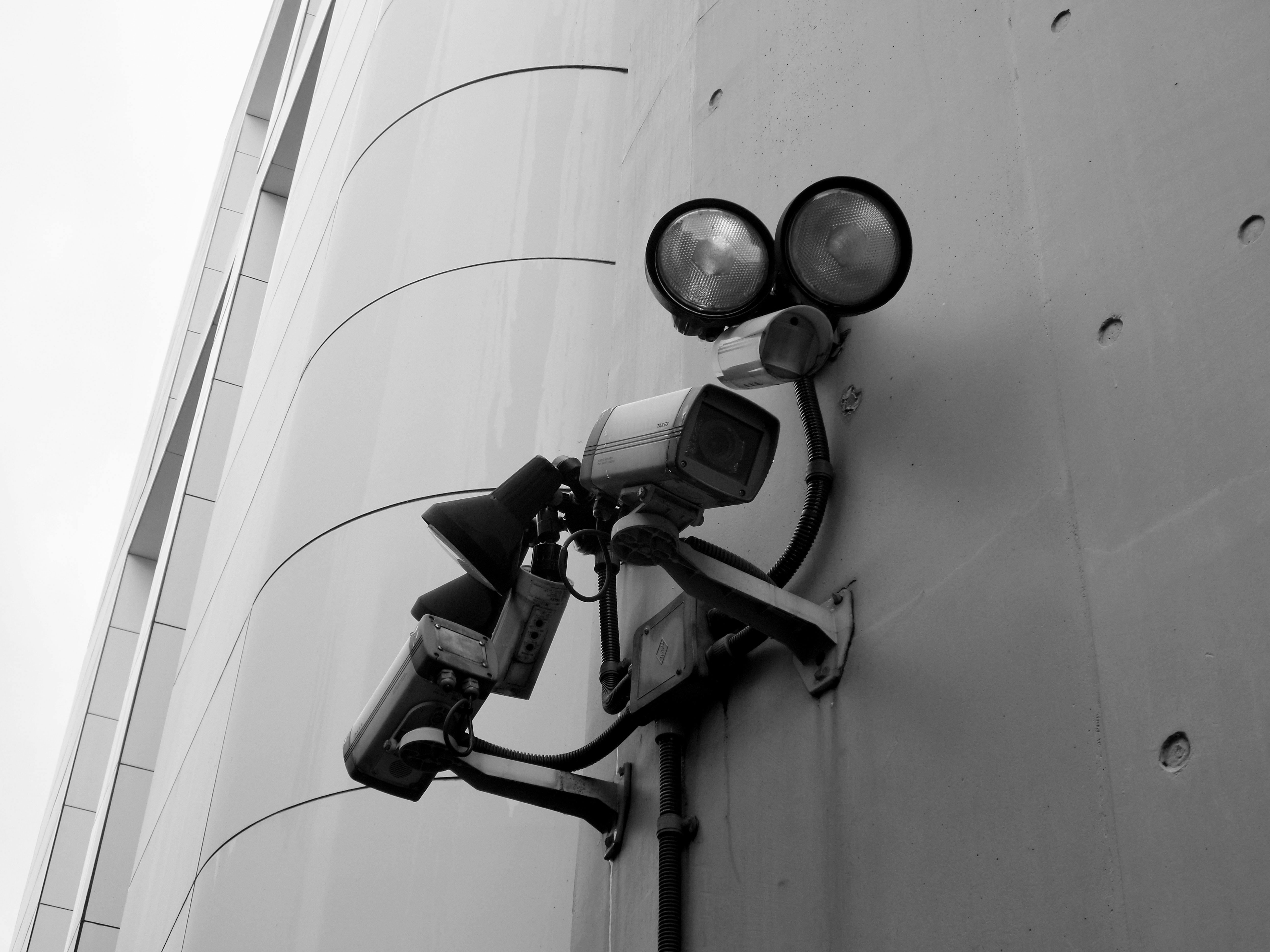
Traditional video surveillance relies on the cloud, resulting in high latency and significant bandwidth pressure.Edge AI devices can perform AI analysis such as facial recognition and behavior detection locally, and immediately issue alerts once an anomaly is detected.To minimize the response time to safety incidents.
Edge AI cameras from companies like Hikvision have become mainstream and are widely used in subways, industrial parks, factories, and other locations.
| Monitoring categories | Typical applications of edge intelligence |
|---|---|
| Urban security | illegal parking detection, area intrusion |
| Industrial Park | Employee safety helmet wearing recognition |
| campus | Early warning of morning check-up behavior |
| Transportation hub | Active identification and tracking of suspicious items |
III. Intelligent Transportation and Automobiles
Vehicle-to-everything (V2X) and intelligent driving
Edge computing enablesA large amount of vehicle-side sensor data can be processed in real time at the terminal, avoiding the latency and bandwidth load caused by cloud backhaul.For example, Mobileye and Baidu Apollo enable L2/L3 level assisted driving and vehicle-to-infrastructure (V2I) communication, while intelligent roadside edge nodes can detect traffic flow, provide fog warnings, and issue emergency accident alerts.
- InnovationV2X (vehicle-to-vehicle/vehicle-to-infrastructure) utilizes edge servers to ensure data exchange and intelligent decision-making are completed within hundreds of milliseconds.
- Recommended tools:Mobileye Automotive Solutions、Baidu Apollo Edge
IV. Medical and Health
Smart healthcare and telemedicine
In medical settings,Edge computing devices can collect and process sensitive data such as vital signs and medical images in real time, improving the response speed of emergency rooms and ICUs.Taking GE HealthCare Edison and Azure Health Edge platforms as examples, innovative medical services are enabled, ranging from local analysis of arrhythmias on monitoring devices to multi-site remote medical consultations.

- Data privacy protectionSensitive health data is processed locally, reducing the risk of privacy leaks caused by uploading data to the cloud.
- Recommended tools:GE HeathCare Edison、Azure Health Edge
Medical Equipment Maintenance and Smart Hospital
Edge AI enables medical equipment to achieve intelligent pre-diagnosis and predictive operation and maintenance, and provides real-time control over hospital energy and drug cold chain.
The data fusion platform can utilize local AI models to perform real-time analysis of abnormal patient flow and energy consumption in the hospital area, and push the results to a smart screen to assist managers in making quick decisions.
V. Retail and New Consumption
Smart retail stores
Retail industry throughEdge Computing performs rapid local analysis of customer traffic, products, and inventory.Retail AI solutions such as SmartShelf and SenseTime support real-time detection of customer hotspots, out-of-stock items, and checkout efficiency, and can push marketing content in seconds to achieve personalized experiences.
| Application scenarios | Business revenue |
|---|---|
| Customer behavior capture | Precise promotional guidance to increase repeat purchase rate |
| Smart shelf replenishment | Reduce stockout rate and optimize inventory capital occupation |
| Digital large screen analysis | Visualize sales volume and hot zones to assist intelligent decision-making. |
Self-service checkout and loss prevention
Edge computing accelerates image recognition and local payment processing, combining facial, product, and mobile payment data to enhance customer experience while preventing theft and damage.

Recommended tools include the SenseTime Smart Retail AI platform.
VI. Energy and Environment
Energy Management and Smart Grid
Under the new energy and distributed energy internet,Edge nodes aggregate field sensing data and schedule distributed power sources, loads, and energy storage devices in real time.Examples include Schneider EcoStruxure and the IBM Edge platform. This ecosystem supports the safe and resilient response of energy systems at the park, factory, and city levels to energy fluctuations.

- Core FunctionsDistributed energy optimization, demand response regulation, and real-time collection of environmental data.
- Recommended tools:Schneider EcoStruxure、IBM Edge Application Manager
Environmental monitoring and emergency early warning
Edge environmental sensors are distributed in key areas such as rivers and the atmosphere. Combined with AI models, they can locally identify pollution sources and abnormal weather, which is far superior to the response speed of traditional centralized processing.
VII. Building Intelligence and Environmental Control
Intelligent Building and Park Management
useLocally deployed building control gateway + distributed AIBy collecting and dynamically optimizing data on energy consumption of lighting, air conditioning, and elevators in real time, energy consumption and carbon emissions are significantly reduced. Honeywell, BuildingIQ, and others are bringing new models of intelligent operation and maintenance for green and environmentally friendly buildings.
| Control object | Edge computing value proposition |
|---|---|
| Air conditioning and lighting | On-demand switching/self-learning energy-saving strategy |
| Elevator/Security | Intelligent scheduling/Local analysis of security anomalies |
| Park large screen | Real-time environmental and energy consumption visualization |
VIII. Content Distribution and Augmented Reality
AR/VR content distribution and edge CDN
Driven by 5G and edge computing, AR/VR interactive content can be rendered and distributed locally at the edge, effectively reducing latency and improving user experience.。

Edge nodes have been deployed across major platforms such as Akamai Edge and Tencent Cloud CDN to support scenarios such as online games, interactive live streaming, and smart exhibition halls.
- Application HighlightsHigh-volume interactive content can be distributed "near-field" without lag during peak business hours, meeting the needs of the next generation of immersive experiences.
IX. Smart Agriculture and Animal Husbandry
Intelligent farmland and livestock management
Agricultural IoT devices are based on edge computing.Real-time sensing and automatic control of the on-site environment in planting areas, greenhouses, and breeding farms.For example, John Deere's smart farm platform and DJI's smart farm services significantly improve the automation of agricultural machinery operations, crop monitoring, and disease prevention capabilities.
- Main benefitsReduce labor input in agriculture, increase the yield and quality of agricultural products, and ensure ecological sustainability.
| Smart Agriculture Types | Edge application cases |
|---|---|
| Smart sprinkler irrigation | Local weather adaptive irrigation |
| Livestock farming | Online monitoring of cattle and sheep health |
10. Industrial and Enterprise Edge AI
Edge AI Box and Enterprise-Grade Computing Acceleration
The rapidly developing AI microserver boxes (such as the Nvidia Jetson series and Huawei Atlas 500) bring AI computing such as deep learning inference and image recognition to local locations such as factories, parks, and commercial cabinets.Empowering enterprises to achieve intelligent transformation on-site, enabling autonomous equipment management and automatic handling of anomalies.。
- Recommended tools:Nvidia Jetson、Huawei Atlas AI Development Kit
Edge computing trends and enterprise strategy recommendations
In 2025,Edge computing has moved from proof of concept to large-scale industrial deployment.For enterprises to build their own edge capabilities around the themes of "security, real-time performance, elasticity, cost reduction, and intelligence" is a necessary prerequisite for data to efficiently drive core business.
- By combining AI and IoT, multi-layered collaboration across edge, device, and cloud enables the release of real-time value.
- Deploying edge computing power at core business sites improves business continuity and local self-healing capabilities.
- In terms of partner selection, priority will be given to cooperating with edge computing platforms that support standardized management, software programmability, and have an active ecosystem.
For visualization and multi-source data fusion, the following can be recommended: FineBI Data Analysis Platform、SenseTime Smart Retail、Akamai Edge Computing Solutions AI tools help businesses easily achieve large-screen monitoring, real-time analysis, and intelligent strategy implementation.
By 2025, edge computing will become the frontline for enterprise digital innovation and efficient data processing. Seize the trend, and you'll win the future!
© Copyright notes
The copyright of the article belongs to the author, please do not reprint without permission.
Related posts



No comments...