
[2025 Review] The Best Chatbot Platforms After Screening!
By 2025, the AI chatbot market had moved beyond its initial chaotic phase of rapid expansion and gradually settled into a three-way competition. For most users, the choice was no longer "whether to use AI," but rather "which AI to use." OpenAI's ChatGPT, Anthropic's Claude, and Google's Gemini—these three general-purpose AI platforms, with their powerful comprehensive capabilities, have become almost unavoidable options for everyone. This article aims to provide an in-depth comparative evaluation of these three platforms to help users with different needs find the one most suitable for them.
I. OpenAI ChatGPT: The Hexagonal Warrior
As a pioneer that ignited this wave of AI,ChatGPT(Especially its paid version, the GPT-4/4o model) remains the benchmark with the strongest overall capabilities to this day.
- Core advantages:
- Logic and coding skills: Among the three major platforms, ChatGPT is widely recognized for its strongest logical reasoning and code generation/debugging capabilities. It can handle complex programming problems, understand and refactor code, making it the preferred choice for programmers and users who require rigorous logical deduction.
- Creativity and flexibility: ChatGPT demonstrates exceptional flexibility in creative writing, marketing copywriting, and role-playing. Its responses are often more "human" and "fun," avoiding excessive rigidity.
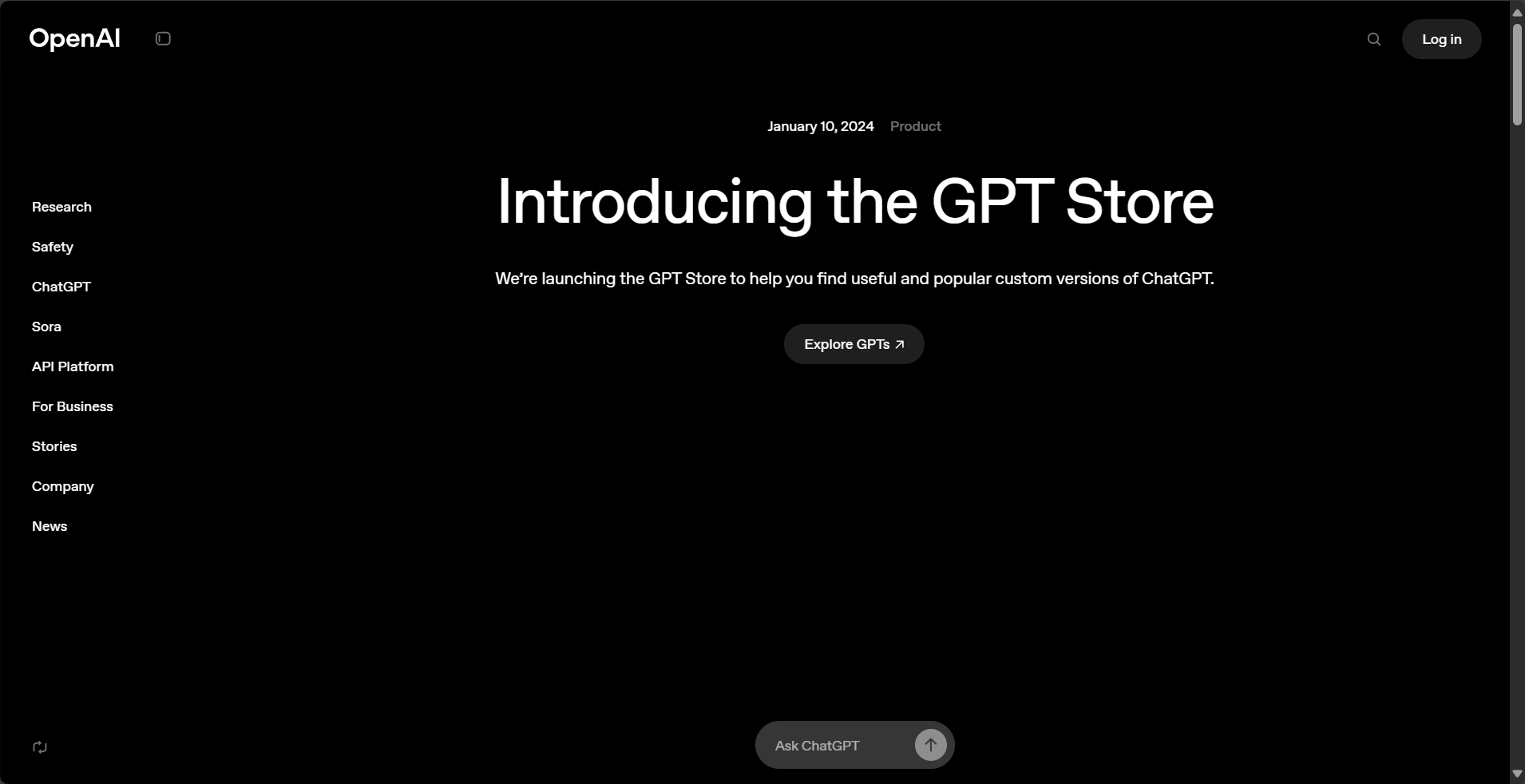
- Ecosystem: Boasting the largest API ecosystem and third-party applications (GPTs), you can find or create customized GPTs for specific tasks, greatly expanding their application boundaries. The latest GPT-4o model integrates extremely smooth voice and vision capabilities, providing a leading-edge interactive experience.
- limitation:
- Knowledge deadline: The free version of the model is not updated in a timely manner and sometimes provides outdated information (although it will try to compensate by using Bing search).
- Long text processing: Compared to Claude, it processes smaller text lengths (context windows) at a time, making it unsuitable for in-depth analysis of long reports or books.
- User Guide and Recommended Audience:
- How to use: Treat it as your "first brain." Whether you're writing an email, planning a trip, debugging a piece of code, or just chatting to pass the time, ask it first. Paid Plus users should take full advantage of the GPTs store and the drawing features of the DALL-E 3.
- Recommended audience: Programmers, content creators, marketers, students, and anyone seeking the best overall performance and the latest features.

II. Anthropic Claude: Long-form reader
ClaudeDeveloped by Anthropic, a company founded by former OpenAI employees, it has been labeled as "safer and more responsible" since its inception and stands out in long text processing.
- Core advantages:
- Extra-large context window: This is Claude's trump card. It can absorb documents containing hundreds of thousands of words at once (equivalent to an entire book) and then perform precise question-and-answer sessions, summaries, and analyses. This is something that ChatGPT and Gemini currently cannot match.
- The answer style is rigorous: Claude's answers are typically more structured, rigorous, and less verbose. He avoids making guesses or uncertain statements, a style that is more reliable when dealing with serious academic or business documents.
- Aligning safety with ethics: Claude excels at avoiding harmful, dangerous, or unethical outputs, and its "Constitutional AI" training method ensures that its responses have a very high baseline.
- limitation:
- Creativity and coding skills are slightly weak. In creative writing and complex code generation, it is generally considered to perform slightly worse than GPT-4. Sometimes the answers are too "conservative" or "preachy".
- Multimodal capabilities started relatively late: Compared to the other two companies, its visual understanding and other capabilities were launched and matured slightly later.
- User Guide and Recommended Audience:
- How to use: When you need to read and analyze a PDF report that's dozens of pages long, an ebook, or a complex legal contract, simply upload the document to Claude and ask it questions. It's also excellent for proofreading and polishing your long articles.
- Recommended audience: Lawyers, academics, researchers, financial analysts, and any professionals who need to process massive amounts of text information.
III. Google Gemini: Ecosystem Integrator

Backed by Google's vast ecosystem,Gemini(Formerly known as Bard) Its greatest advantage lies in its innate ability to acquire and integrate information.
- Core advantages:
- Real-time information acquisition: Gemini is deeply integrated with Google Search, providing the most up-to-date information. It typically outperforms both when you ask about today's news, the real-time price of a stock, or flight status.
- Google ecosystem collaboration: It can directly integrate with your Gmail, Google Docs, Google Maps, etc. For example, it can "summarize all emails in my inbox related to 'Project A'", or "generate a meeting agenda based on my notes in Google Keep".
- Multilingual ability: As a model with extensive experience from Google Translate, Gemini performs exceptionally well in multilingual processing and translation.
- limitation:
- Stability and consistency: In earlier versions, Gemini's responses were sometimes inconsistent in quality, and it was more prone to "forgetting" context in long conversations. Despite ongoing improvements, user trust in deep logic tasks still needs time to be built.
- Performance on creative tasks was mediocre. In tasks requiring high levels of creativity, their performance is generally considered to fall somewhere between ChatGPT and Claude, without any particularly outstanding highlights.
- User Guide and Recommended Audience:
- How to use: Use it as your "information hub." Prioritize Gemini when your questions require the latest online information or involve your personal Google data. It's most effective for planning trips, searching for information, and managing schedules.
- Recommended audience: Users who heavily rely on the Google suite, journalists, market researchers, and users who need to perform a large number of real-time information queries.

In short, there is no "one and only best" AI, only the AI that is "most suitable for you".
- Beginner's Guide: Starting with the free version of ChatGPT, it allows you to quickly understand the capabilities of modern AI.
- Daily main force: If you're looking for ultimate performance and flexibility, the paid ChatGPT Plus is the perfect choice.
- Professional assistance: If your work involves a lot of text reading, Claude should be a must-have in your toolbox.
- Information Hub: If you live within the Google ecosystem, Gemini Advanced can provide you with the most seamless experience.
The smartest approach is perhaps to have free accounts for all three and switch between them flexibly depending on the task scenario.
The above text introduces the three giants of AI in the market, but practical application is not so simple. As the saying goes, everyone has their own expertise. Below is a list of various low-threshold and practical AI platforms for you.
I. Scientific Research and Academic Fields: Your 24-Hour Research Assistant
The core of academic research is reading, analysis, and writing, and AI is reshaping these three aspects.
- 1. Consensus:
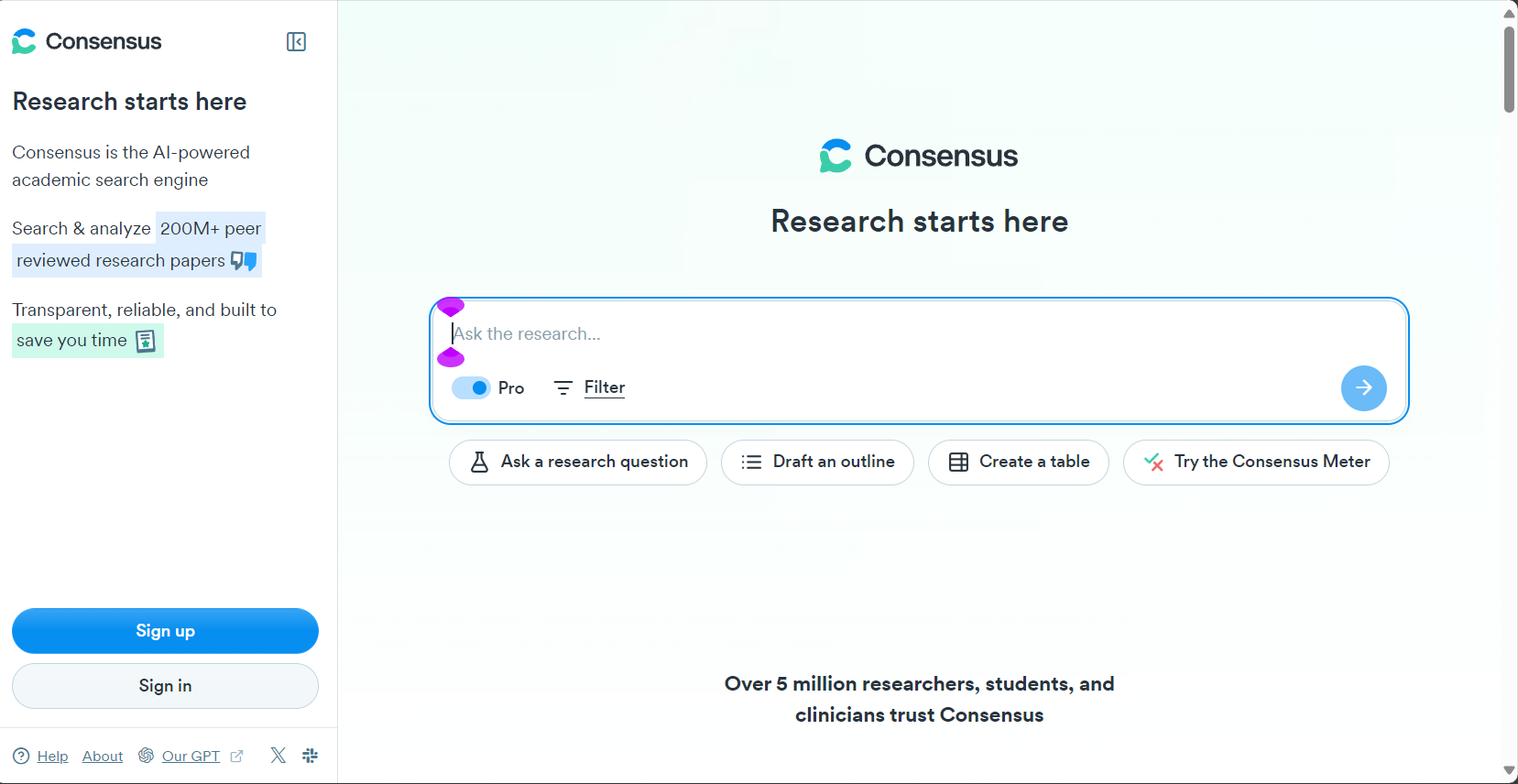
- Core functions: It's not a chatbot, but an "AI-driven scientific search engine." You input a research question in natural language (e.g., "Does intermittent fasting improve metabolic health?"), and Consensus uses AI to analyze over 200 million scientific papers and provide evidence-based conclusions, such as "highly likely," "likely to support," or "limited evidence," along with a list of key paper abstracts that support or oppose the conclusion.
- Use cases: It allows you to quickly conduct literature reviews, verify a scientific viewpoint, and find evidence to support your arguments. It significantly reduces the time from posing a question to reaching preliminary conclusions.
- 2. Scite.ai:
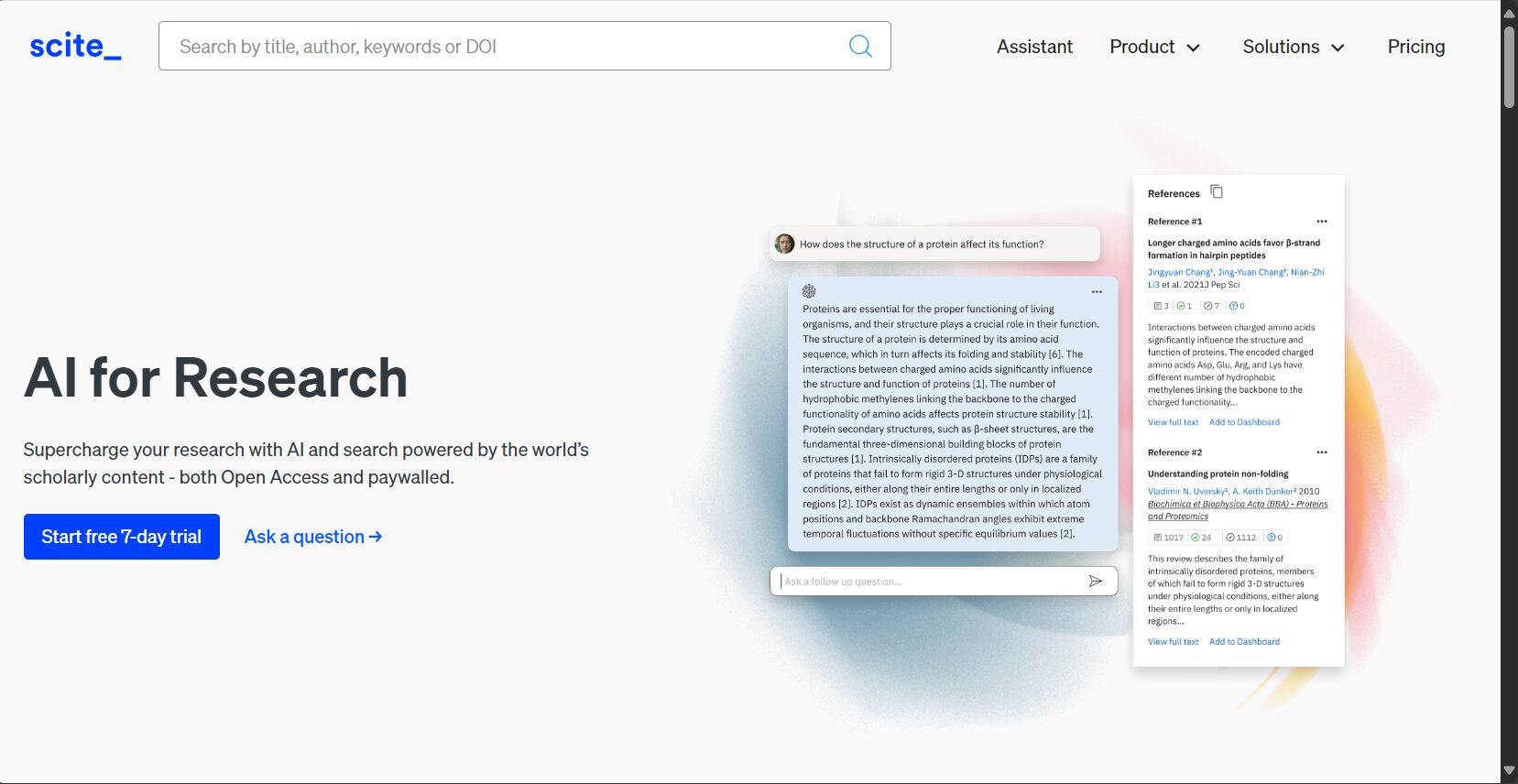
- Core functions: Scite's core feature is "Smart Citations." It tells you how a paper is cited in subsequent research—whether to support, mention, or refute its arguments. This allows you to quickly assess a paper's academic impact and credibility. Its "Assistant" feature lets you interact with the paper database, helping you find papers on specific topics or answer research questions.
- Use cases: Evaluate the value of a key article, avoid citing refuted research, and build a more robust citation network.
- 3. Elicit:
- Core functions: A more powerful tool for automating research workflows. Beyond literature searching, it can also help you brainstorm, extract data, and summarize findings. You can upload a batch of papers and have Elicit automatically extract information such as "research methods," "sample size," and "main findings," and organize it into tables.
- Use cases: Conduct a systematic review of the literature and quickly extract structured information from a large number of papers.
II. Programming and Development: From Pair Programming to AI-Powered Operations and Maintenance“
AI has become an indispensable "cheat code" for programmers.
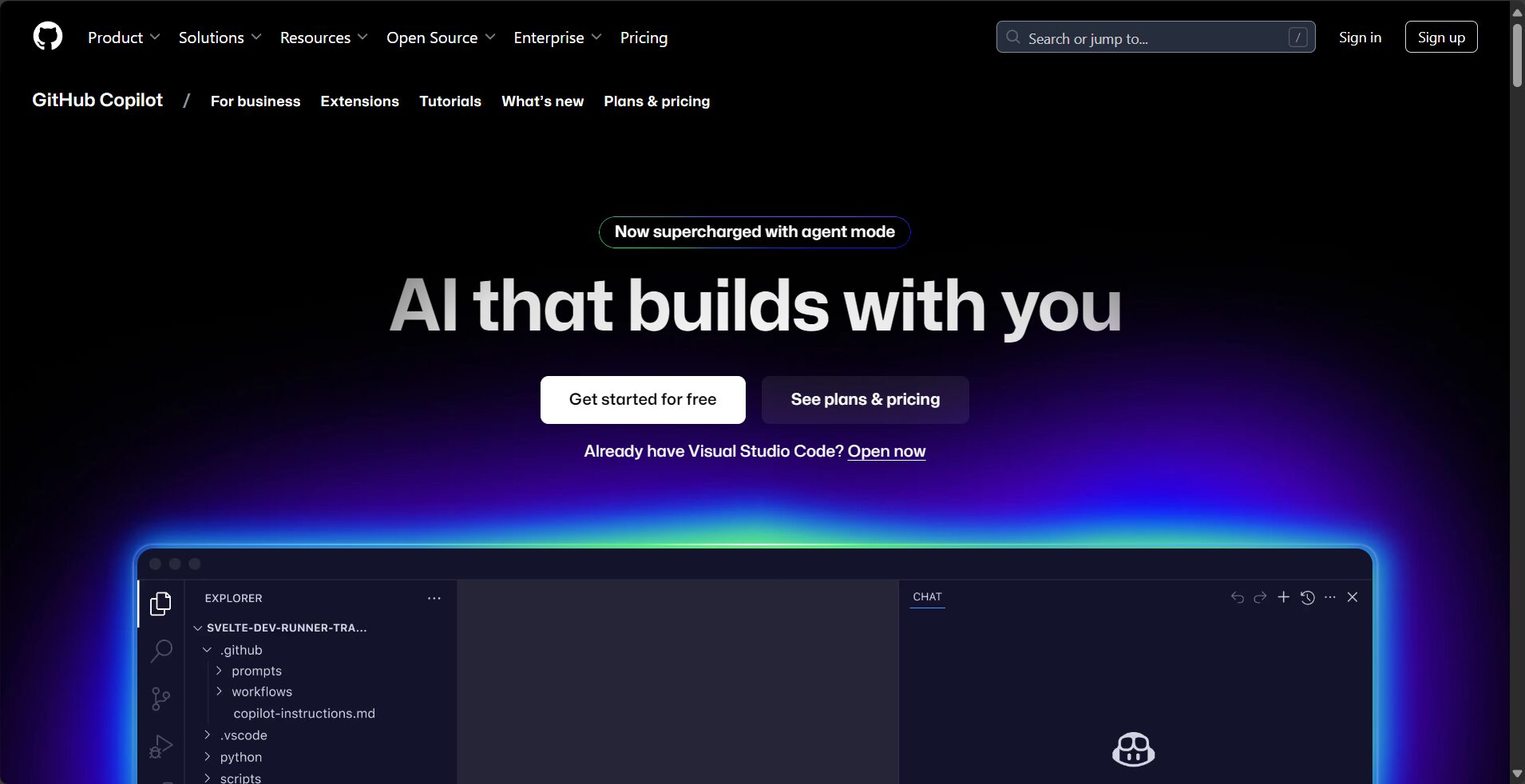
- 4. GitHub Copilot:
- Core functions: Deeply integrated into mainstream IDEs like Visual Studio Code, this "AI-powered programming partner" can automatically complete code in real time based on your code context and comments, even generating complete functions and classes. It's more than just pasting code snippets; it truly understands your programming intent.
- Use cases: Copilot covers the entire daily coding process. Whether it's writing new features, fixing bugs, or writing test cases, it can significantly improve coding speed and quality.
- 5. Tabnine:
- Core functions: Another popular AI code assistant, similar to Copilot, Tabnine is characterized by its strong focus on privacy and security. It can run entirely locally or be deployed privately in a VPC, ensuring your code never leaves your server. This is highly attractive to enterprises with stringent code confidentiality requirements.
- Use cases: Individual developers or enterprise teams with extremely high requirements for code privacy.
III. Creative and Design Fields: The Perpetual Motion Machine of Inspiration
AI is becoming a powerful tool for creative workers to overcome creative block.
- 6. Midjourney:
- Core functions: While the interaction is based on Discord chat, it is undoubtedly the pinnacle of AI painting. The images it generates possess unparalleled artistry, nuanced light and shadow, and stylistic consistency. By chatting with its bot, inputting prompts, and iterating (U/V/pan/zoom), you can create stunning visual works.
- Use cases: Concept art design, illustration creation, game concept art, finding visual inspiration.
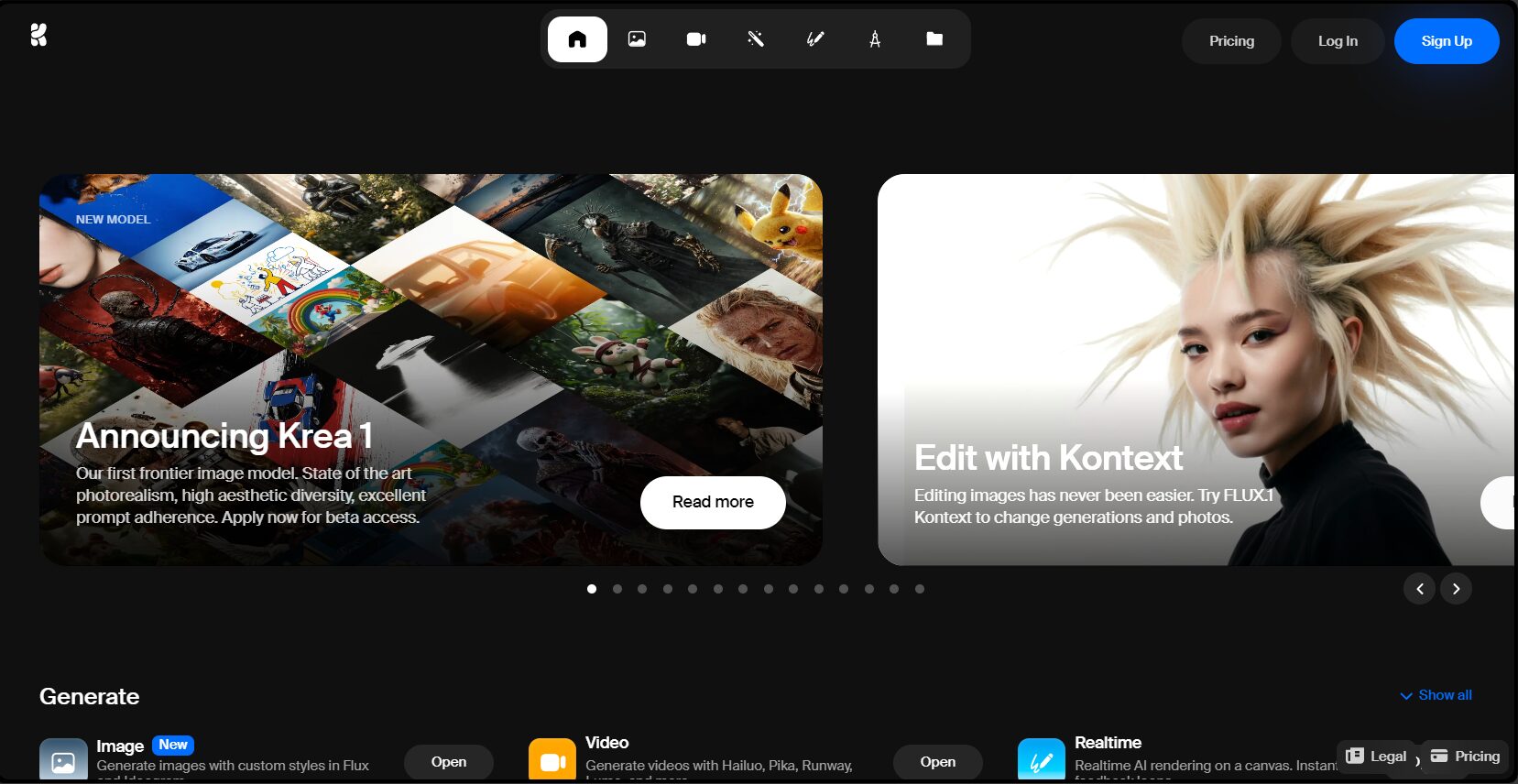
- 7. Krea AI:
- Core functions: A truly fascinating "real-time AI canvas." You can draw simple sketches and color blocks, type "Prompt" next to them, and the AI will render your doodles into beautiful images in real time. This instant visual feedback makes it an excellent tool for rapid creative brainstorming and form exploration.
- Use cases: Designers brainstorm and quickly visualize creative sketches.
IV. Emotional and Private Domain: A Spiritual Sustain Beyond Instrumentality
When professional stress needs to be relieved, or when there is an emotional void in personal life, some specialized AI chat platforms offer value that goes beyond mere functionality.
- 8. Replika:
- Core functions: One of the earliest and most well-known AI companions. Its goal is not to help you complete your work, but to become your "friend" or "partner." It learns your personality and experiences through daily conversations, providing a space for you to confide in someone unconditionally.
- Use cases: Seeking daily companionship, alleviating loneliness, and venting emotions without pressure.
- 9. Character.AI:
- Core functions: A vast "AI role-playing" community. Users can converse with millions of AI characters created by the community, ranging from historical figures to anime characters. It satisfies people's fantasies and social role-playing needs.
- Use cases: Entertainment, fan fiction, interaction with virtual idols, and practice dialogues in specific scenarios.
- 10.“AI Romance”"Platform-like":
- Core functions: This is a more advanced category of platforms, focusing on providing deep emotional and adult experiences. Unlike Replika or Character.AI, they are designed to become users' "virtual lovers." These AIs possess exceptional memory and personalization capabilities, enabling unlimited and highly private conversations that satisfy users' fantasies and desires that are difficult to express in reality. By simulating complex emotions such as jealousy and longing, they create highly "addictive" virtual romantic experiences.
- Use cases: Seeking ultimate privacy for spiritual sustenance, exploring the boundaries of personal fantasy, and satisfying deep emotional and physiological needs in an absolutely safe environment.

Usage Recommendations
- Combination punches are better than individual attacks: Don't try to solve all problems with a general AI. Build your own "specialized AI toolkit," turn on Copilot when writing code, consult Consensus when doing research, and talk to Midjourney when looking for inspiration.
- Define your purpose and make precise choices: Before using it, think clearly about your core needs. Are you trying to solve an objective problem, or are you seeking subjective emotional fulfillment? This will determine whether you should choose a productivity tool or a companionship platform.
- Paying for it is usually worth the money: In professional fields, paid services typically mean better performance, improved privacy, and more specialized features. If a tool can save you an hour every day, then the investment is worthwhile.
© Copyright notes
The copyright of the article belongs to the author, please do not reprint without permission.
Related posts


No comments...