
What is Grokipedia? A comprehensive guide to network intelligence in the AI era.
GrokipediaLaunched by xAI (founded by Elon Musk), it is a new AI-driven knowledge encyclopedia platform. Its main features include...“"Content generated entirely by AI, automatically verified, and free from subjective bias"”Positioned as a strong competitor to Wikipedia, this article provides a multi-dimensional analysis of how Grokipedia is disrupting the traditional crowdsourced knowledge production model, covering its background, content mechanisms, technical principles, controversies, and future industry impact.Neutrality, accuracy, open sourceThe challenges and prospects.
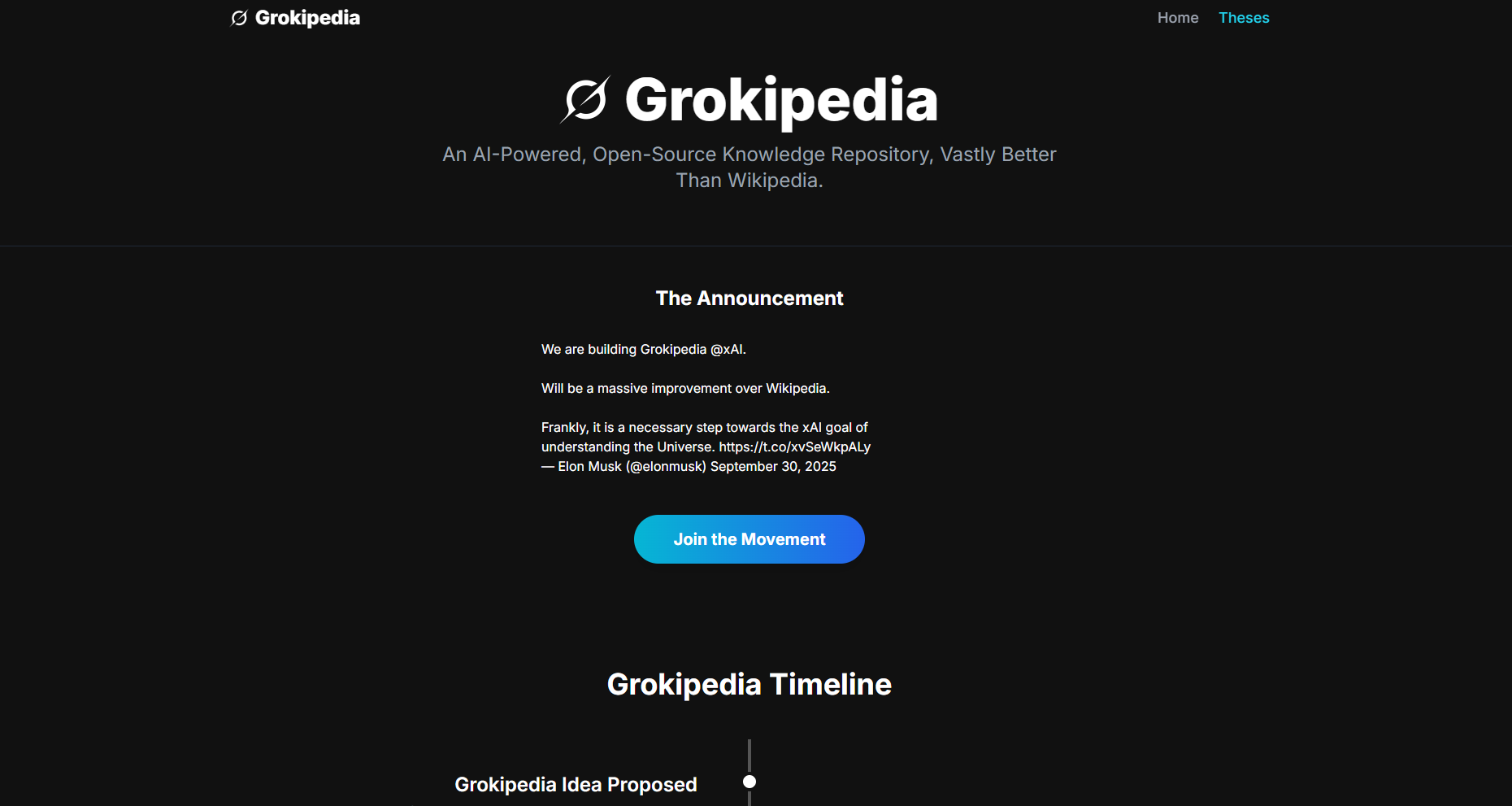
Grokipedia Introduction
The Background and Birth of Grokipedia
GrokipediaLed by xAI, and spearheaded by Elon Musk, founder of Tesla and SpaceX, Grokipedia aims to revolutionize traditional encyclopedias through AI, addressing issues such as bias and inconsistent quality found on Wikipedia. Grokipedia officially launched on October 27, 2025, with its official website at [website address missing].grokipedia.com。
Main features:
- Content production and review are entirely driven by AI.
- The goal is to eliminate bias and enhance knowledge neutrality.
- At its launch, it included approximately 900,000 articles from all fields.
| Basic attributes | content |
|---|---|
| Launch time | October 27, 2025 |
| Development Company | xAI |
| Founder | Elon Musk |
| Main features | Entirely built by artificial intelligence |
| Content Scale | Approximately 900,000 articles (early data) |
| Official website | grokipedia.com |
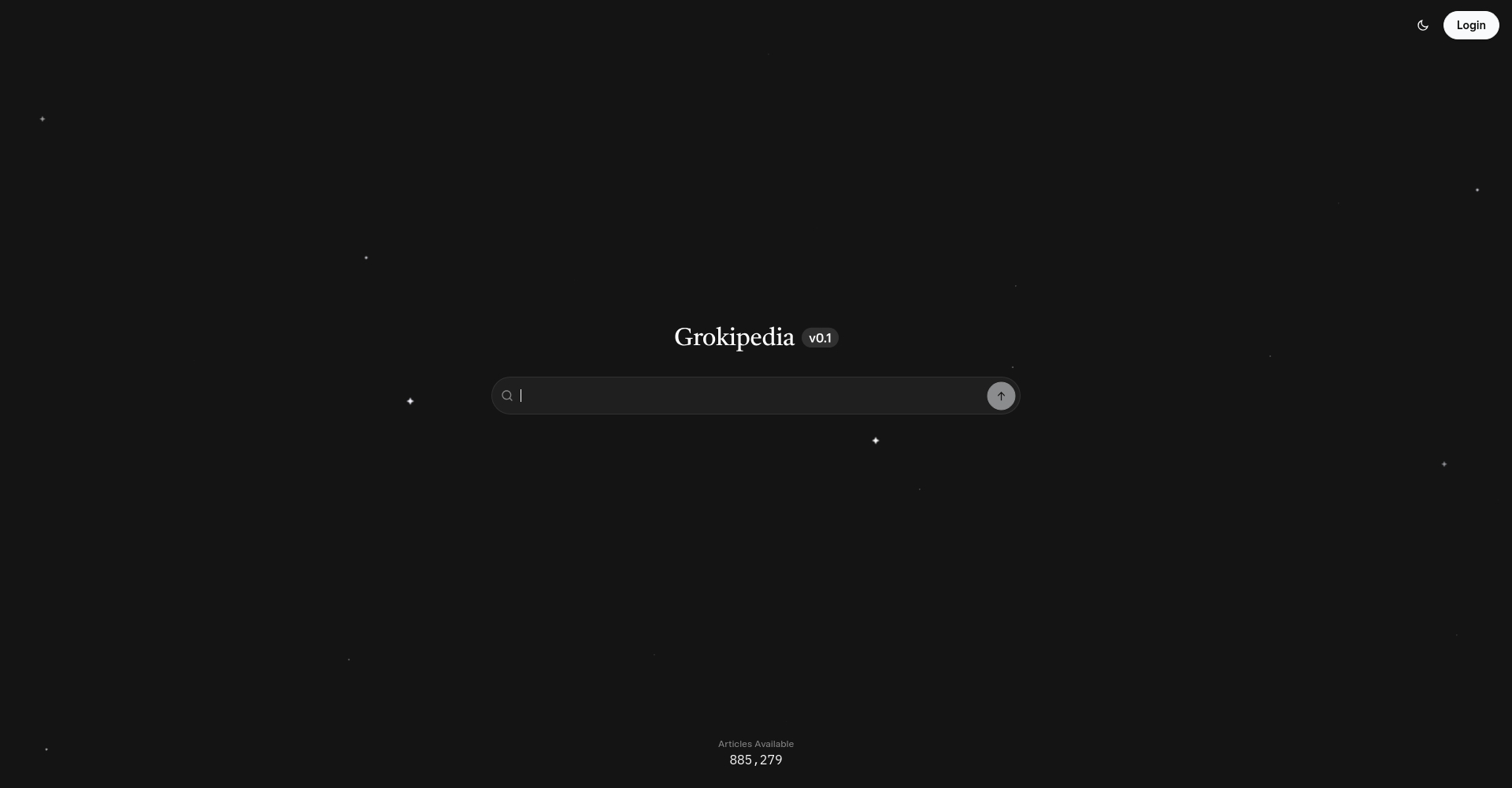

The difference between Grokipedia and Wikipedia
Grokipedia differs fundamentally from Wikipedia in its content generation mechanism.While Wikipedia relies on global volunteers for gradual editing and review, Grokipedia is entirely written and revised automatically by AI, resulting in extremely fast content creation. Grokipedia incorporates a large amount of basic knowledge from Wikipedia, but emphasizes "de-subjectivity" and "content simplification."
| Comparison Projects | Wikipedia | Grokipedia |
|---|---|---|
| Content production | Group volunteer collaboration | AI automatically generated |
| Fact Review | Community manual proofreading | AI independently verifies“ |
| neutrality | Community divisions have a significant impact. | Algorithm target: debiasing |
| multimedia | Supports text, images, audio, and video. | Currently only text |
| Openness | Fully Open Editing | AI-controlled main unit, not yet available. |
| Licensing method | CC BY-SA 4.0 | Partially adopted, not fully open source |
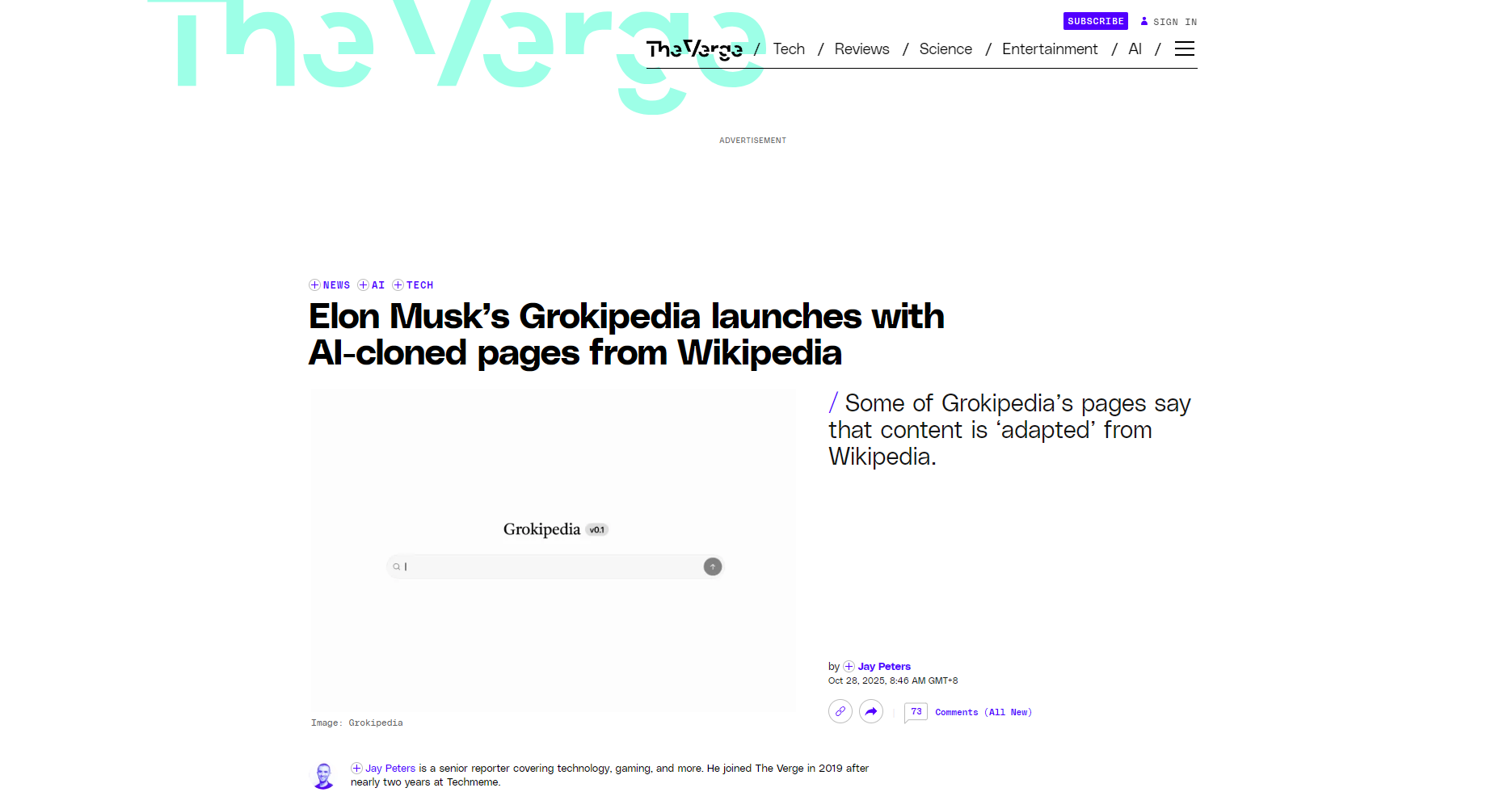
For more details, please refer to:The Verge Special、Forbes column。
Grokipedia Content Mechanism and AI Technology Analysis
How does Grok's large language model support Grokipedia?
Grokipedia relies on xAI's self-developed Grok large model engine, which has the ability to crawl large-scale data, integrate information, and verify facts.It supports high-speed automatic summarization, innovative encyclopedia format, and automatic addition of "AI verification" tags.
- Large-scale collection and abstraction of Internet information
- Multi-stage AI fact-checking enhances authority.
- Supports multiple languages and automatic updates of industry-specific content.
Those interested can visit directly.Grok official introduction。
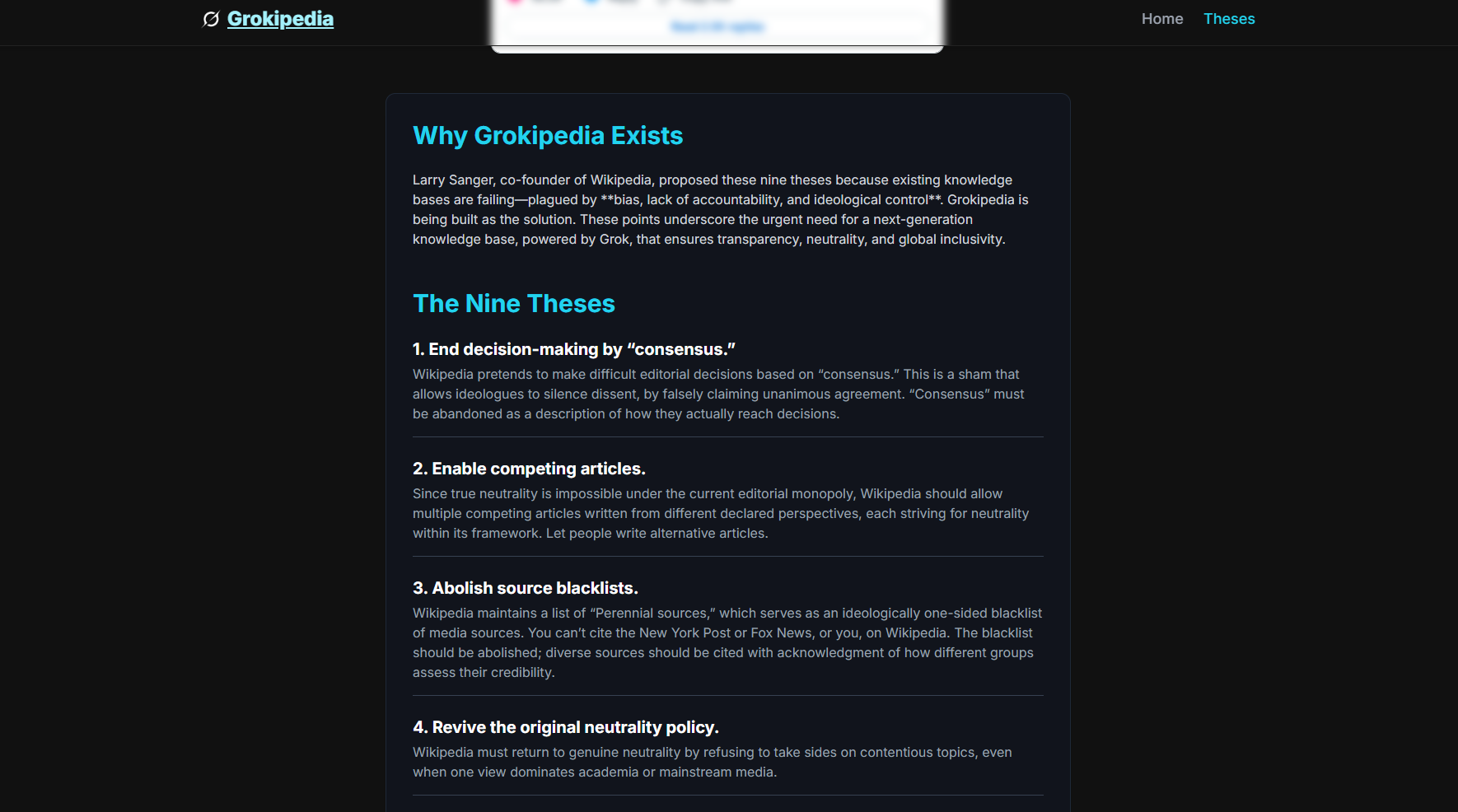
Content source, citation and plagiarism controversy
Grokipedia was immediately criticized upon its launch for having many entries similar to Wikipedia, and even for direct copying.xAI stated that it will strengthen model training and originality detection in the future. However, some content "plagiarism" is currently unavoidable, and the company will attempt to automatically cite sources using AI, adding a unique xAI/Musk perspective.
- AI-automated tagging: main reference sources
- Quotation style automation
- Some content incorporates the development team's perspectives.
- Ultra-fast content iteration, real-time knowledge updates
Grokipedia's Controversy and External Evaluation
The controversy surrounding neutrality, accuracy, and "debiasing" techniques
Despite Grokipedia's emphasis on debiasing, its AI foundational models and data training inevitably carry developer bias.In its early stages, media outlets generally pointed out that the content leaned towards the far right and "pro-Musk" views, and that some science, medicine, and gender issues were not truthful or diverse.
| Controversy Focus | Typical viewpoints |
|---|---|
| Political leanings | NBC/Wired pointed out that some entries had a strong right-wing bias. |
| Publicity handling | Musk said, "Remove the hype."“ |
| AI bias problem | Public opinion holds that AI-generated encyclopedias are more likely to spread bias. |
| Facts are inaccurate | The entries on science and medicine, and biographies, are highly controversial. |
| Lack of originality | Highly similar to Wikipedia content |
Crowdsourcing collaboration vs. automated AI: which is better?
- AI-powered encyclopedias spread knowledge extremely quickly, but they struggle to fully capture complex details and diverse perspectives.
- Medical issues and controversial topics still require expert oversight; relying solely on AI cannot achieve absolute impartiality.
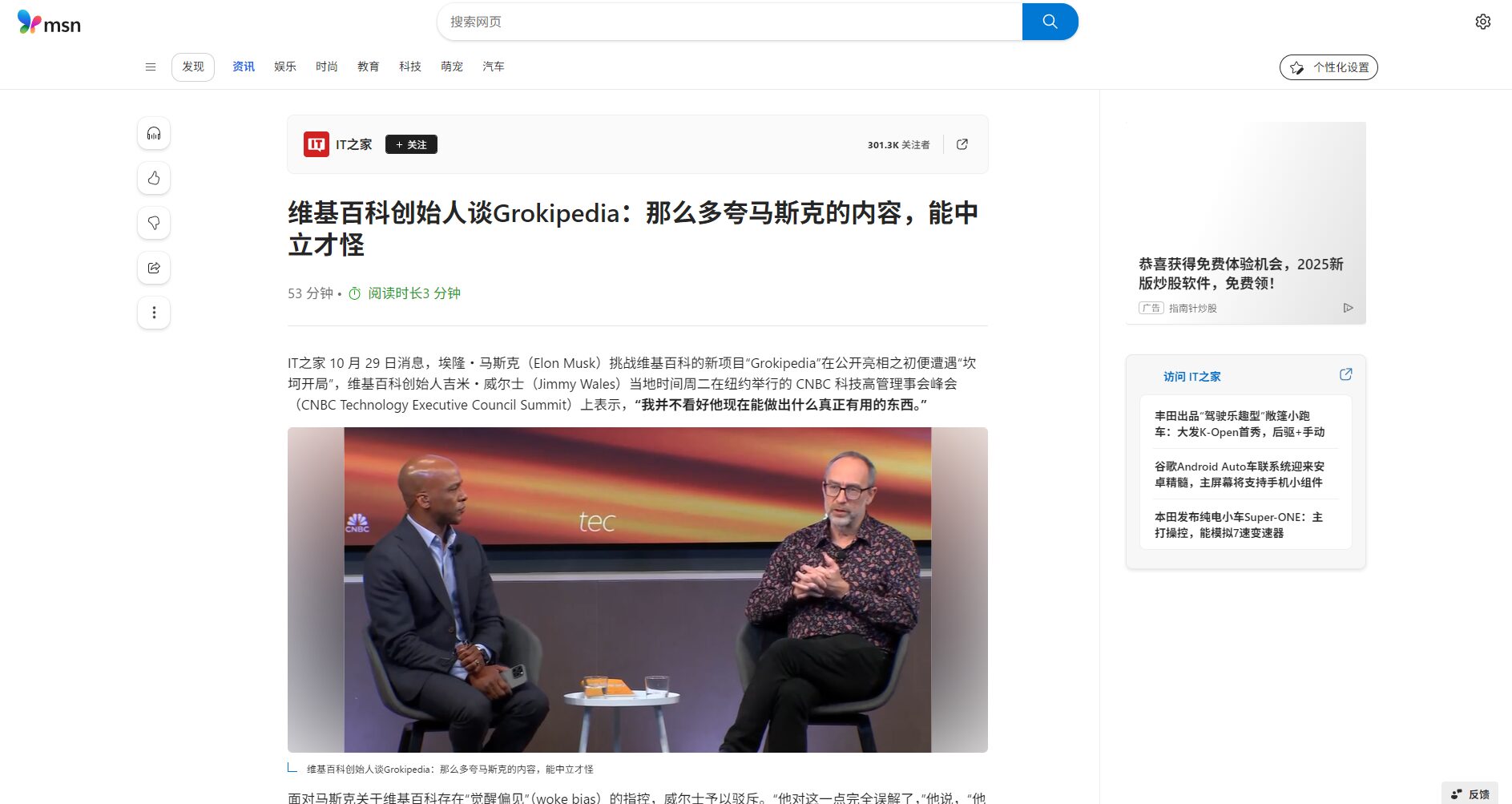
- Experts, including the founder of Wikipedia, have admitted that Grokipedia may trigger a new round of information chaos.
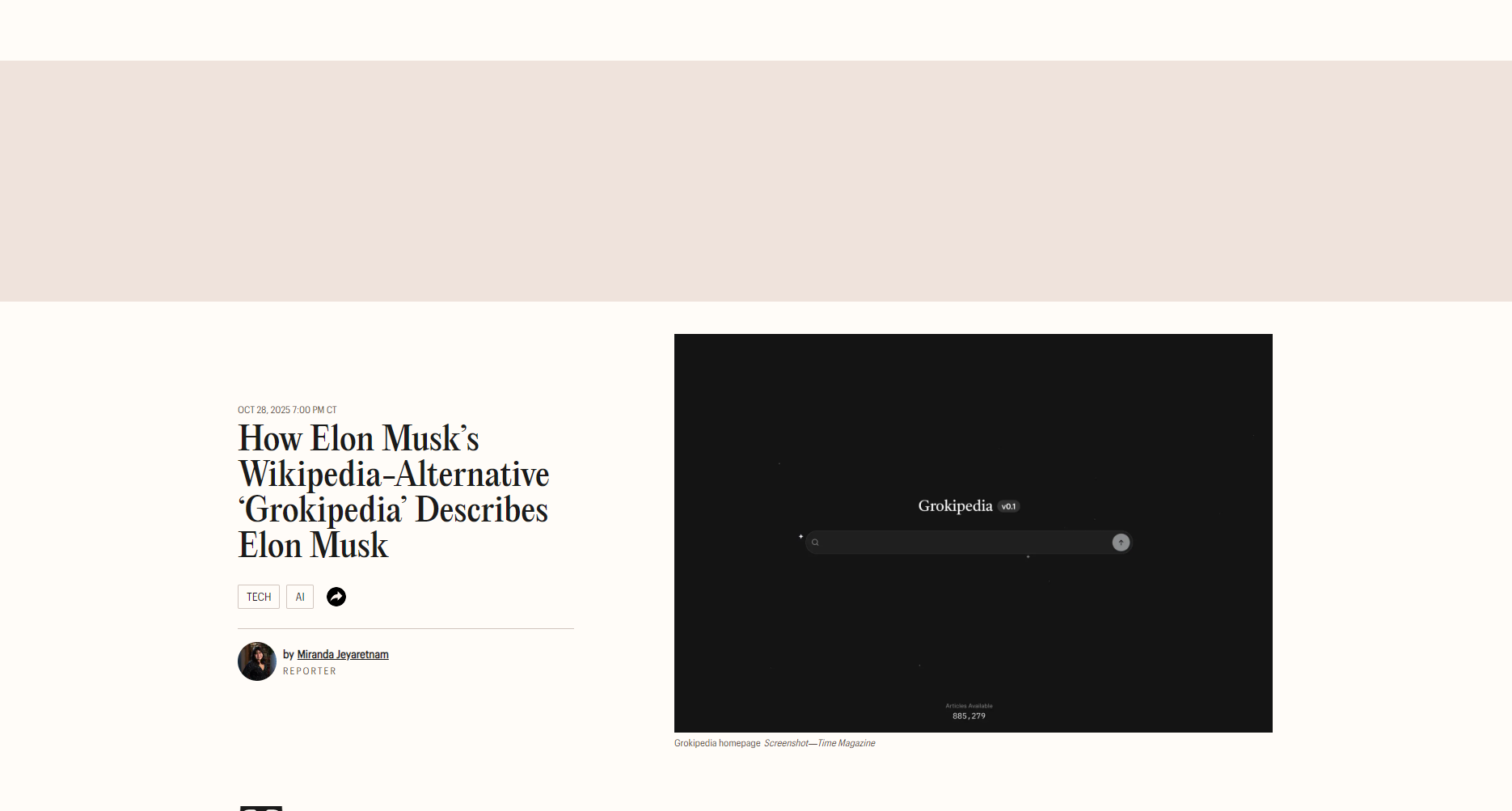
Further Reading:TIME Column Analysis
The Future of AI Encyclopedias: Grokipedia's Impact and Industry Significance
Motivations for global attention
Grokipedia foreshadows the accelerated transformation of the knowledge ecosystem driven by AI, which may challenge or even disrupt the mainstream of crowdsourced knowledge production.
| Trends/Risks | Significance/Mechanism |
|---|---|
| AI-driven encyclopedias | Machine-generated output challenges human dominance |
| Multilingual expansion | In the future, it can rapidly cover global knowledge languages. |
| Information cocoon risk | Without professional oversight, the bias effect is amplified. |
| Open censorship mechanism | There is an urgent need to establish new standards for AI content moderation. |
Comparison with other AI knowledge tools
| platform | Generation mechanism | Coverage | Advantages | Availability |
|---|---|---|---|---|
| Grokipedia | Dedicated AI model | All fields (initial English) | Leading in both capacity and novelty | Free web version |
| Wikipedia | Group collaboration | All-domain/Multilingual | Human experience is profound | Fully open |
| Perplexity AI | AI crawling/citation | General Information | Real-time search highlights | Official website |
| You.com | AI+Web aggregation | News/Encyclopedia/Images | Multimodal fusion is convenient | Official website |
Conclusion
The launch of Grokipedia heralds the arrival of an era of rapid automation in AI knowledge production, bringing a huge impact to the industry.Industry insiders generally believe that while AI encyclopedias improve the efficiency of knowledge dissemination, achieving true fairness, objectivity, and high quality still requires human participation and high-standard collaboration. Whether Grokipedia can lead a new era of AI-powered intelligent encyclopedias built by the entire population remains to be seen and will require market and time to verify, but it has already sent a clear signal:In the AI era, knowledge is also being reshaped.
© Copyright notes
The copyright of the article belongs to the author, please do not reprint without permission.
Related posts



No comments...