
Recommended AI Model Training Tools for 2025: A Comprehensive Comparison of 7 High-Performance Platforms (with Usage Scenarios Analysis)
AI model training toolsAs the core productivity of the AI and big data industry in 2025, it presents three major trends: automation, no-code, and hybrid deployment.This article uses an in-depth news comparison format.A Roundup of Seven Top Model Training Platforms (DataRobot, H2O.ai, Google Vertex AI, Azure Machine Learning, Amazon SageMaker, RapidMiner, KNIME)The study provides a detailed analysis of each product's highlights, typical scenarios, and applicable industries, matching specific needs from multiple dimensions, including enterprises, scientific research, education, and government.A one-stop reference tool comparison helps AI newcomers, data scientists, and decision-makers make efficient selections and promote digital transformation and upgrading.
Recommended AI Model Training Tools for 2025: A Comprehensive Comparison of 7 High-Efficiency Model Training Platforms (with Usage Scenarios Analysis)
With the rapid development of artificial intelligence and big data applicationsAI model training has become one of the core competitive advantages.From enterprise machine learning projects and academic research to data analysis and product recommendations,Choosing the right, efficient AI model training tools is key to improving productivity.This article is presented in the form of a news report.A comprehensive comparison of 7 of the most representative AI model training platforms in 2025.It provides in-depth analysis of the applicable scenarios for each platform. Whether you are a data scientist, engineer, decision-maker, or AI novice, you can obtain a one-stop reference.
Overview: A Comparison of the Top 7 AI Model Training Tools in 2025
| Tool Name | Main features | Automation/No-code | Supported model types | Deployment mode | Recommended applicable scenarios | Entry URL |
|---|---|---|---|---|---|---|
| DataRobot | Full-process automation and strong business integration | 是 | Multiple traditional/AI | Cloud/Ground/Hybrid | Rapid iteration of finance, insurance, retail, and senior management. | DataRobot |
| H2O.ai | Open source leader, automated feature engineering | Partial (H2O Driverless AI) | Multiple | Cloud/Local | Healthcare, government, developers, and R&D cost sensitive | H2O.ai |
| Google Vertex AI | Integrating Google ecosystem and AutoML | 是 | Machine Learning/Deep Learning | cloud | AI production line deployment, cross-departmental collaboration, Google users | Vertex AI |
| Azure Machine Learning | Microsoft ecosystem, powerful pipeline management | 是 | Traditional / AI / Deep Learning | Cloud/Ground | Financial, healthcare, enterprise-level, and large-scale government projects | Azure ML |
| Amazon SageMaker | Cloud-based automation, one-stop deployment | 是 | All types | cloud | Logistics, retail, IoT, and AI products are rapidly launched. | SageMaker |
| RapidMiner | Strong analysis and prediction of drag-and-drop workflows | 是 | Traditional/Partial AI | Desktop/Cloud | Education, introductory courses, data analysis, corporate training | RapidMiner |
| KNIME | Fully open source, massive data interconnection | 是 | Traditional/Partial AI | Desktop/Cloud | Research and development, education, and data pipeline construction | KNIME |
Why will the landscape of model training tools be completely reshaped by 2025?
According to Gartner and domestic and international market reports, the AI model training field will see three major trends in 2025:
- Automated AI (AutoML) is becoming the mainstream. – Simplifies the traditional model training process, allowing beginners to get started quickly.
- Multi-cloud hybrid deployment becomes standard Information security and compliance requirements drive cross-regional solutions.
- No-code, drag-and-drop design explodes – “Point-and-click” has become the norm for data teams.
Further Reading:Artificial Intelligence Market Size Forecast for 2025
A detailed analysis of seven major AI model training platforms (including user pain points, solutions, and typical scenarios).
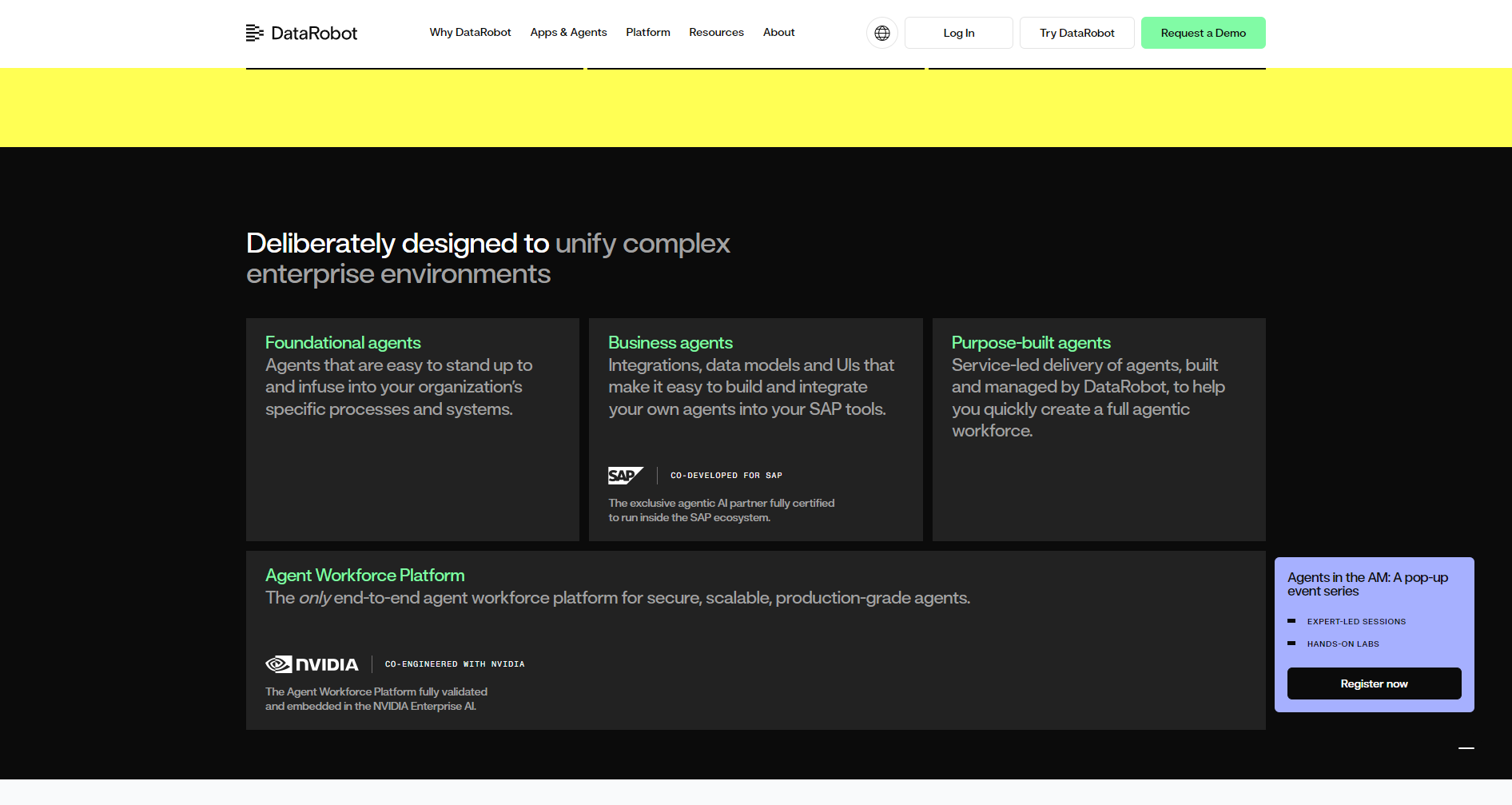
DataRobot – The Preferred Automated Model Training Platform for AI Decision Making

Key features:
- Fully automated model training (AutoML)
- Includes built-in model competition and sorting for lightning-fast selection of the best.
- Supports data quality assessment and custom monitoring
- Extensive API integration capabilities
Applicable scenarios:
- Enterprise data teams (finance, insurance, retail, etc.) are eager to "automatically generate and interpret" AI models.
- Scenarios requiring extremely high compliance and audit records (such as risk management)
- C-suite and business departments can quickly conduct proof-of-concept (POC) projects.
Typical Case: A Fortune 500 insurance company is using DataRobot to increase the speed at which it generates policy fraud detection models by 10 times.
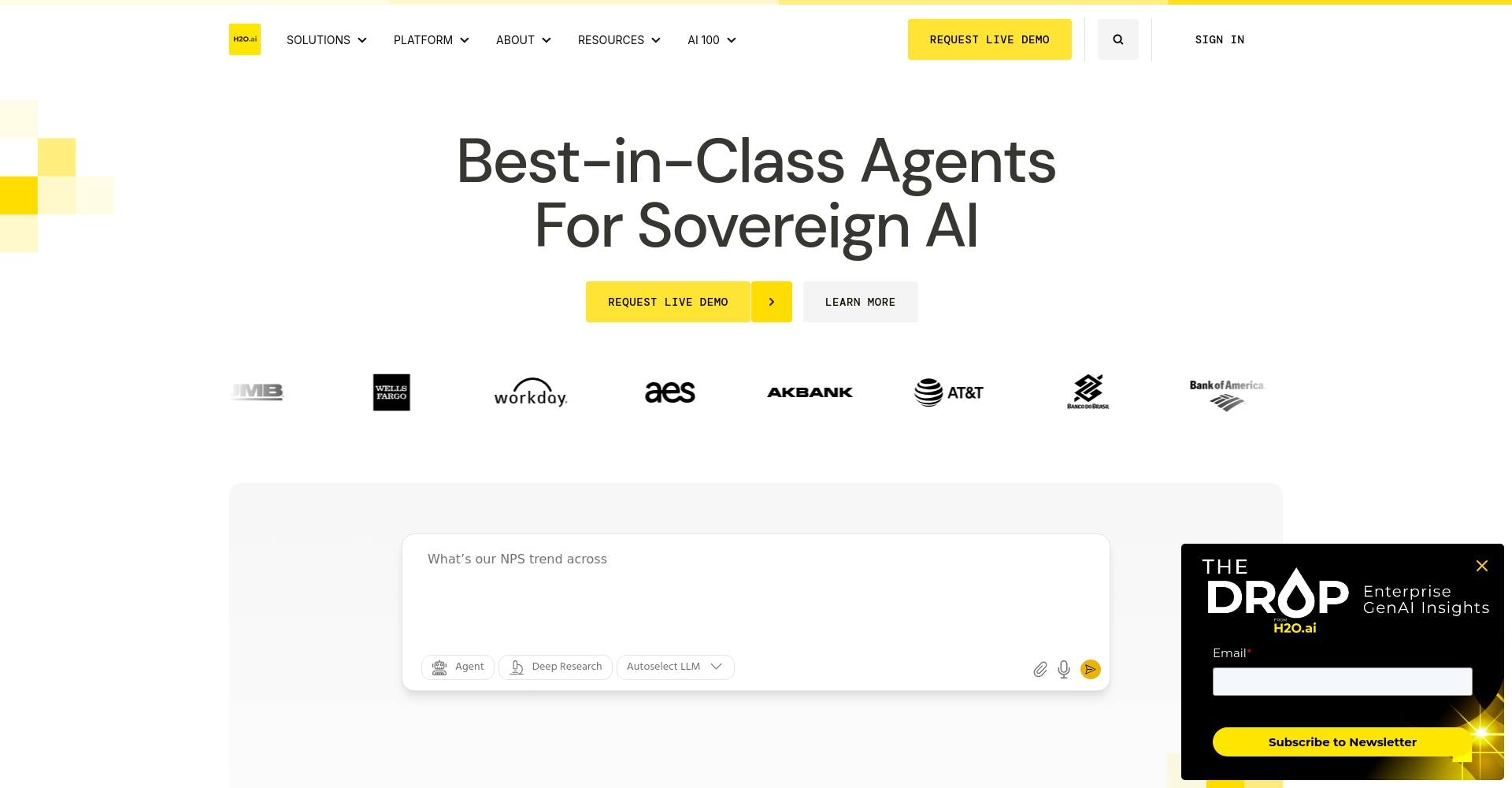
H2O.ai – The flagship team of open-source AutoML
Key features:
- Open source and free (H2O-3), highly flexible
- H2O Driverless AI is an enterprise-grade AutoML solution that supports automated feature engineering.
- Supports high-speed local CPU/GPU training
Applicable scenarios:
- Scientific researchers, developers, and low-budget teams
- IT departments that need to customize ML processes and build private clouds
- High-sensitivity data analysis in healthcare, finance, and government
Unique advantages: H2O.ai has a large community, a rich suite of tools, and APIs that span Python, R, and Java, making it easy to embed into existing data pipelines.
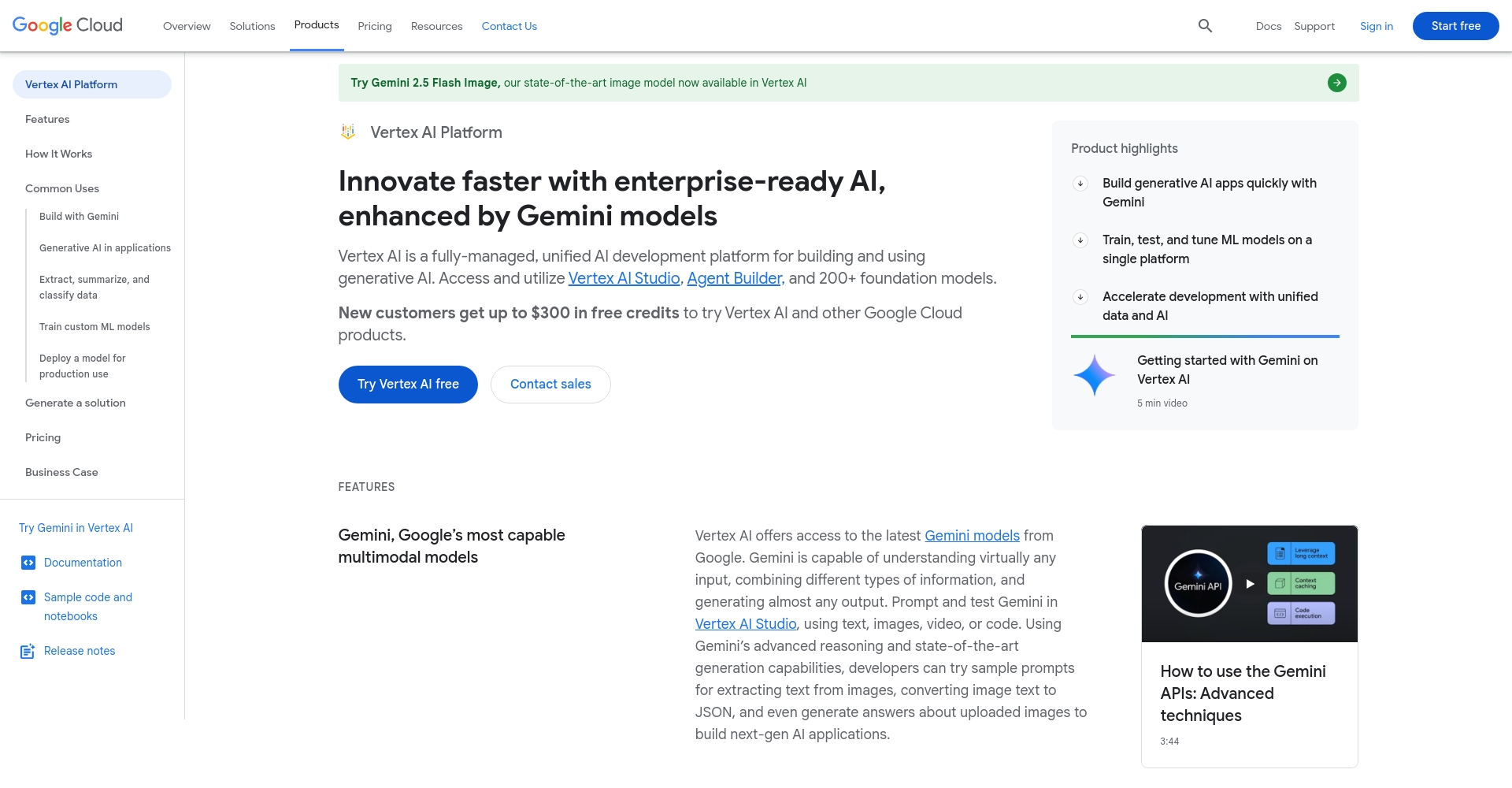
Google Vertex AI – The Ultimate Integration of Google Cloud AI Capabilities
Key features:
- Strengthen the integration of AutoML and MLOps to manage the entire model lifecycle.
- Natively integrates with the GCP big data ecosystem (BigQuery, etc.)
- Supports training of multiple models including deep learning, BERT, Vision, and NLP.
Applicable scenarios:
- Google Cloud users want a one-stop cloud AI solution.
- Cross-departmental data collaboration workflow (entire process of uploading, training, deployment, and monitoring)
- The product needs to be quickly "released in the cloud + adjusted + continuously updated".“
Use cases: Online retailers used Vertex AI to rapidly iterate their product recommendation models within three weeks, resulting in a monthly sales increase of 151 TP3T.
| platform | Automatic Feature Engineering | Support deep learning | Multilingual API | Data security level |
|---|---|---|---|---|
| DataRobot | ✅ | part | ✅ | Enterprise level |
| H2O.ai | ✅ | part | ✅ | 高 |
| Vertex AI | ✅ | ✅ | ✅ | Enterprise level |
| Azure ML | ✅ | ✅ | ✅ | Enterprise level |
| SageMaker | ✅ | ✅ | ✅ | Enterprise level |
Azure Machine Learning – The Preferred Choice for Enterprise Deployment
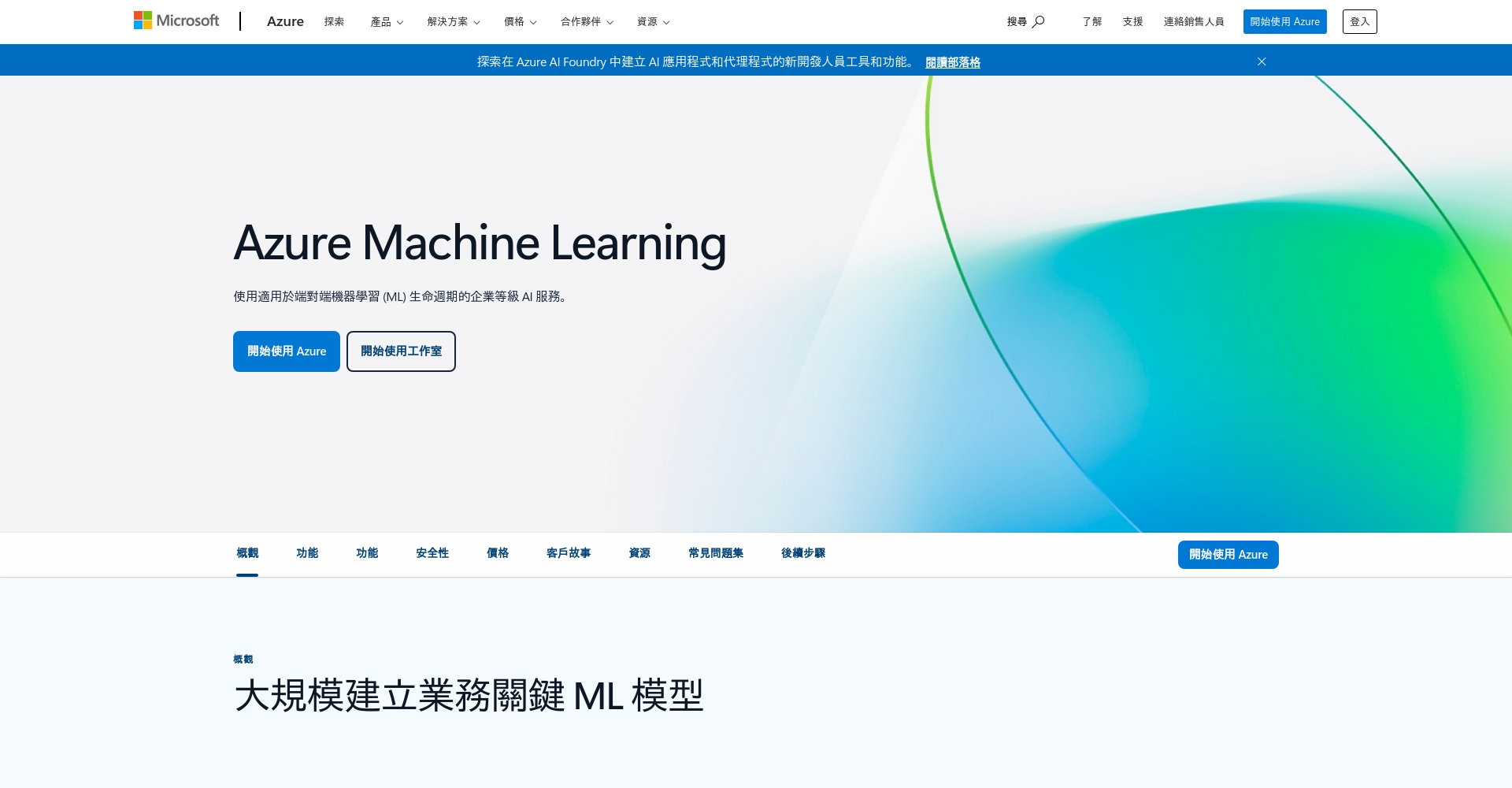
Key features:
- Advanced AutoML, supporting end-to-end pipeline management
- Seamless deployment in Azure and on-premises environments, with robust compliance capabilities.
- Low-code drag-and-drop experiments significantly improve team collaboration efficiency
Applicable scenarios:
- Financial, medical, and government sectors must comply with regulations.
- Cross-departmental collaborative model training (sharing data/model across teams)
- Massive production data pipeline automation
Additional features: Internal model training-based governance, transparent audit records, and one-click automatic API deployment reduce obstacles to the implementation of AI products.
Amazon SageMaker – A Machine Learning Engine for the AWS Era
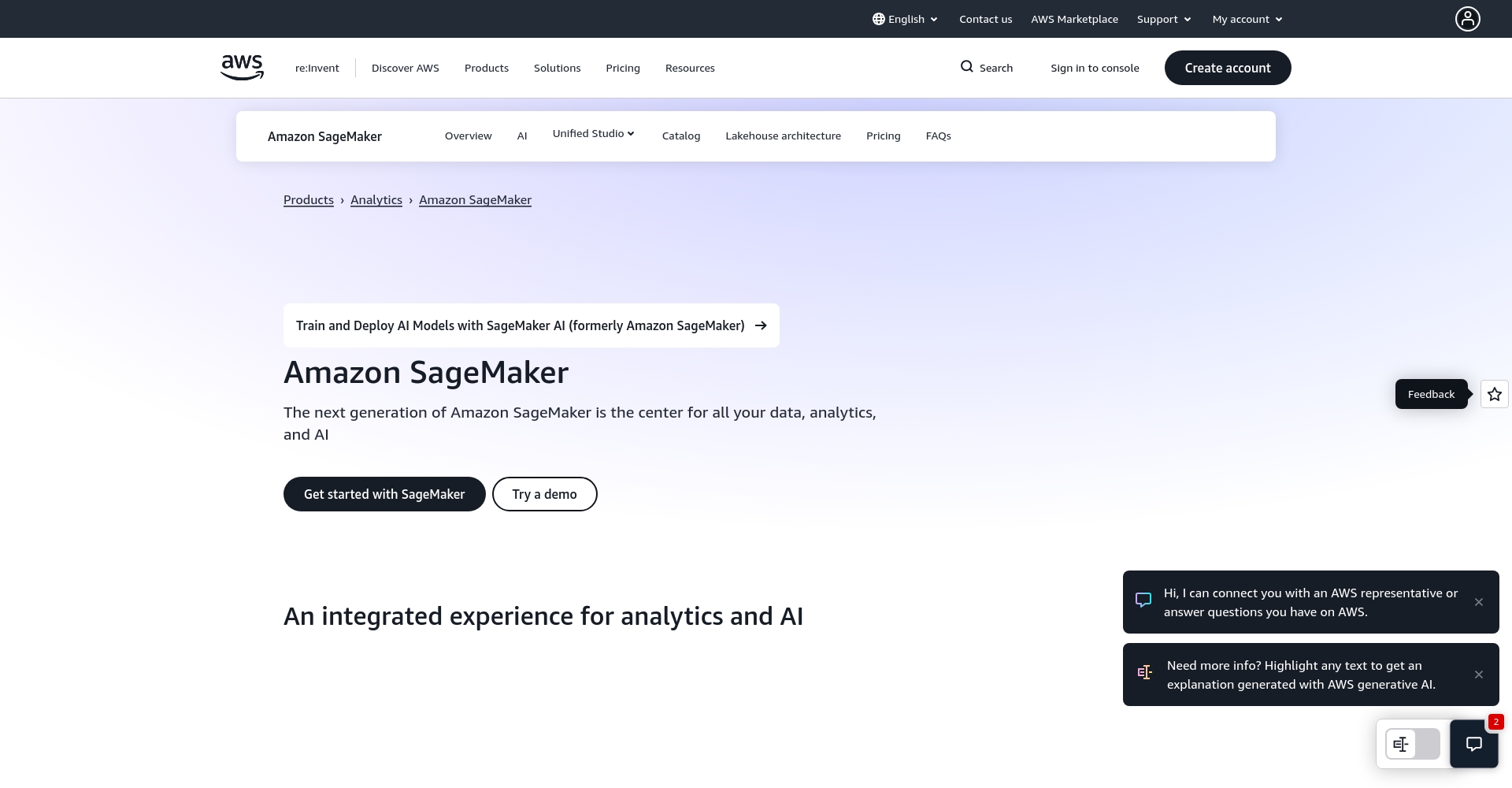
Key features:
- “Fully automated model training completed in one stop from development to deployment.
- Supports hundreds of algorithms and self-built containers
- Automatic Model Tuning, Cost-Adaptive Scheduling
- Built-in MLOps tools (continuous monitoring/tracking/digital governance)
Applicable scenarios:
- Enterprises hope to mass-produce AI products and deploy them globally (IoT, SaaS applications).
- E-commerce, marketing, IoT, big data real-time analysis
- Combined with automated deployments such as AWS Lambda
Representative cases: A leading US logistics company uses SageMaker to automatically predict peak order periods, resulting in a 22% reduction in capacity allocation costs.
RapidMiner – An excellent choice for beginners in AI and education
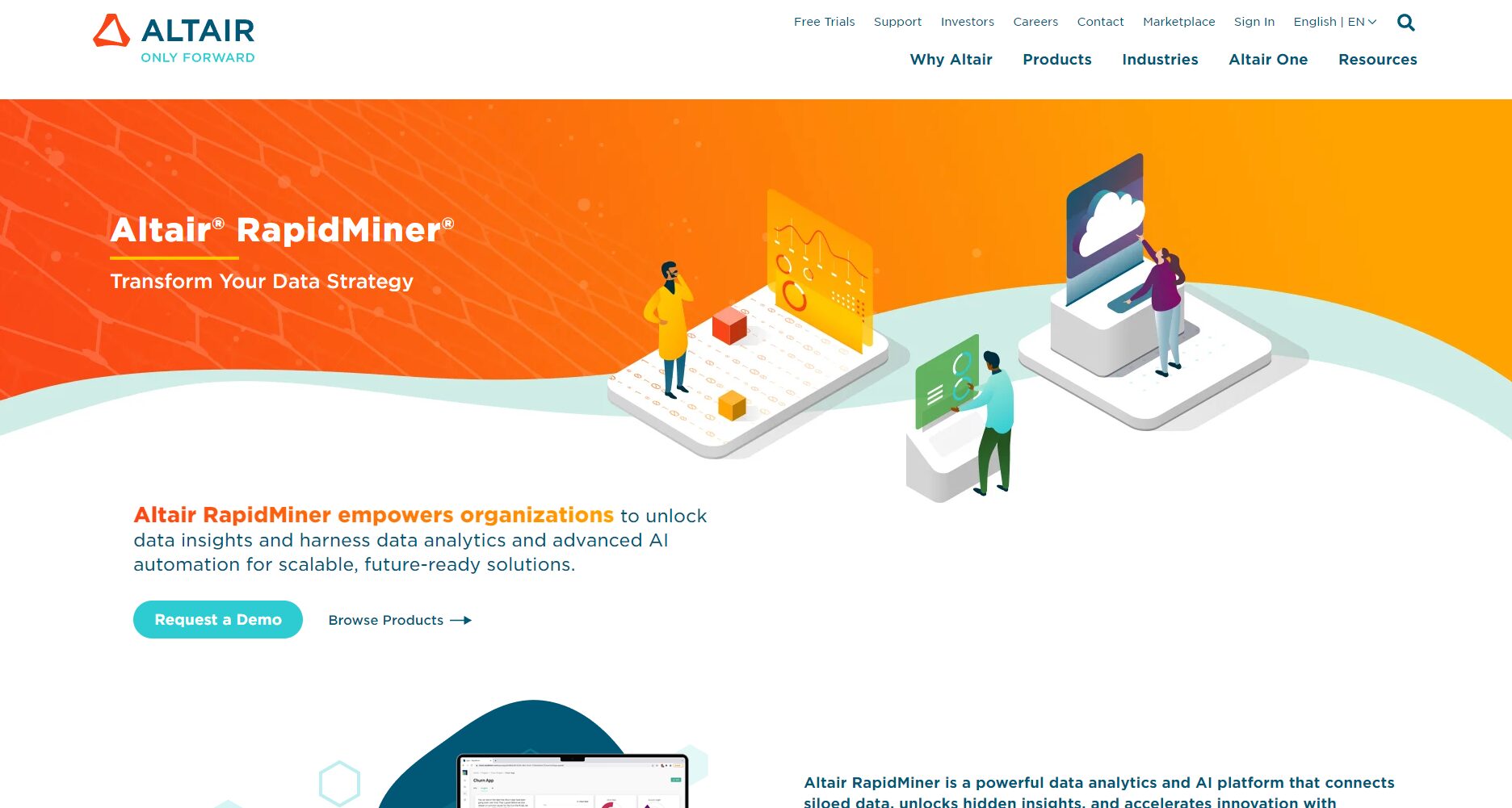
Key features:
- Drag-and-drop design, no programming knowledge required.
- Supports 280+ analytics and machine learning algorithms
- Visualized workflow (mature "node + pipeline" mechanism)
Applicable scenarios:
- AI beginners, educational institutions, and corporate training needs
- KDD, Marketing Forecasting, Human Resource Analysis
- Small projects or quick creative POC testing
Platform advantages: Supports connections with multiple languages such as Python and R. Offers both desktop and cloud modes, allowing for flexible resource allocation.
KNIME – Modular Customization, Comprehensive Data Pipeline Expert
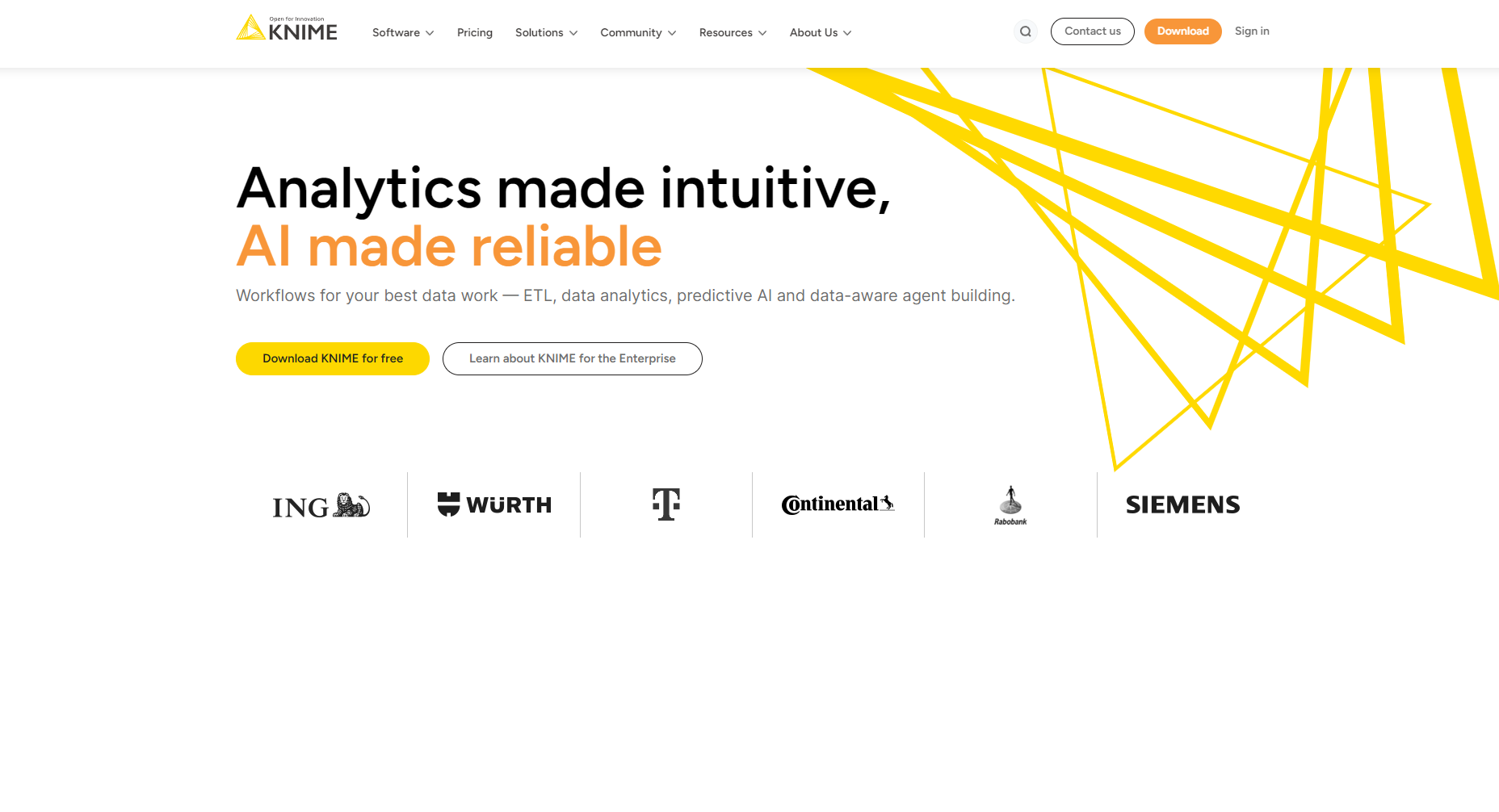
Key features:
- Completely open source, with no licensing restrictions.
- Node-based data operation pipeline; customizable underlying height.
- Supports advanced technologies such as Python, R, and Spark.
Applicable scenarios:
- Essential for research teams and universities
- Large-scale data pipeline cleaning, ETL automation
- High integration of different data sources and processes is required
Developer value: KNIME supports a "plugin marketplace" that allows users to add next-generation modules such as NLP and computer vision, making it an excellent tool for combining enterprise and educational research.
A comprehensive approach to meet diverse deployment needs and multi-industry applications.
Key Considerations for Selecting AI Model Training Tools
Based on project scale:
- Small-scale in-house training/rapid verification:RapidMiner, KNIME
- Large-scale commercial implementation, strict compliance:DataRobot, Azure ML, SageMaker
Based on data sensitivity level:
- Contains sensitive data/regulatory requirements: PrioritizedDataRobot, Azure ML, and H2O.ai on-premises deployment
- Public data and open research: KNIME, H2O.ai, RapidMiner are all options.
Based on the depth of AI technology:
- Machine learning is the primary method.RapidMiner, KNIME, H2O.ai
- Requires deep learning/large models:SageMaker, Vertex AI, Azure ML
Team collaboration requirements:

- Cross-departmental and system-wide collaboration:Azure ML, Vertex AI
- High customization capabilities required: H2O.ai, KNIME
Frequently Asked Questions Quick Reference
| Demand type | Best recommendation platform | Why |
|---|---|---|
| No-code visualization model training | RapidMiner, DataRobot | Beginner-friendly, with a visual analysis workflow that minimizes the learning curve. |
| Open source, flexible customization/low budget | H2O.ai, KNIME | Free, large community, rich modules, highly customizable |
| Demand for professional automated build | DataRobot, SageMaker | Fully automated iterative model selection, parameter tuning, and one-stop deployment |
| Hybrid deployment of cloud and on-premises | Azure ML | Flexible options and strong regulatory compliance |
| Applicable to AI+ business integration | Vertex AI, SageMaker | Easy integration with GCP/AWS ecosystem, fast API integration |
Overview of AI Model Training Tool Scenarios in 2025
- Retail and Internet Industries: For models that can be quickly deployed and adapt to changes, SageMaker and Vertex AI are recommended.
- Government and healthcare: With a focus on data protection and regulations, H2O.ai's on-premises solutions and Azure ML are gaining popularity.
- Finance and Insurance: Emphasis is placed on explainability and automated governance; DataRobot and Azure ML are leaders in this field.
- Education and Research: With the need for openness, flexibility, and multilingualism, KNIME and H2O.ai are unlikely to shake their leading positions.
- Product Development and AI SaaS: With a focus on deployment flexibility and API interfaces, SageMaker and Vertex AI perform exceptionally well.
Conclusion
In the face of a plethora of AI model training tools available in 2025, choosing the "right tool" requires considering clear needs, industry scenarios, and the team's technical capabilities!
The widespread adoption of AutoML has lowered the barrier to entry for training AI models.However, the key to efficiently producing compliant and competitive AI models still lies in judging the fit between platform characteristics and scenarios. This in-depth comparison aims to provide decision-making reference for your AI transformation journey.
To stay up-to-date with industry trends, please follow our AI model training section!
© Copyright notes
The copyright of the article belongs to the author, please do not reprint without permission.
Related posts


No comments...