
What is Generative AI? This article will give you a quick overview of the principles and applications of generative AI.
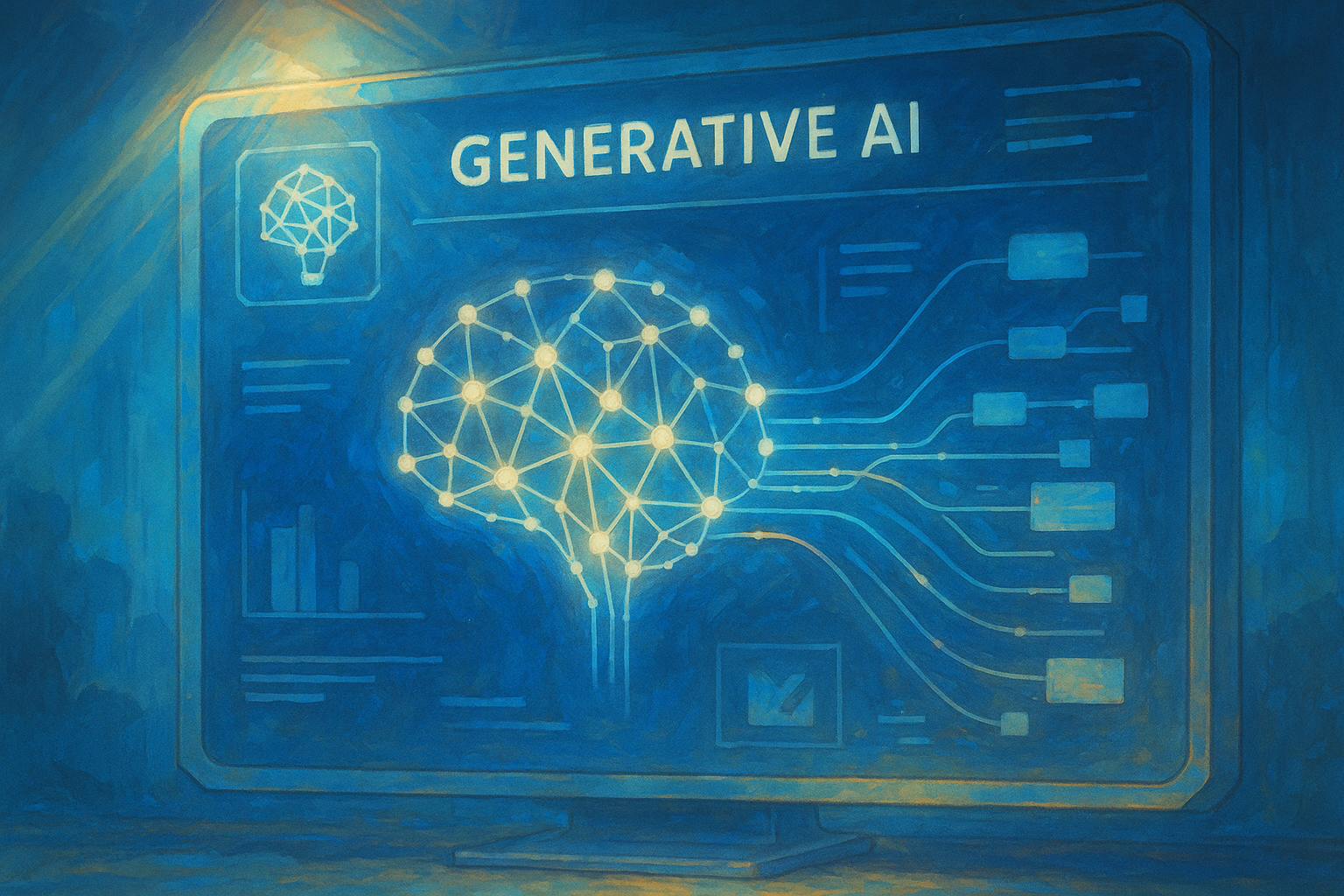
In recent years, generative AI has swept the globe with astonishing speed. Whether it's ChatGPT generating dialogues, Midjourney creating exquisite illustrations, or GitHub Copilot assisting in writing program code,Generative AI has greatly boosted efficiency and content innovation across various industries..So,What exactly is generative AI?What are the underlying principles of generative AI? What are its applications in real life and work? This article will systematically outline the core principles and mainstream application scenarios of generative AI in the style of news reports, and combine mainstream tools and products to help you quickly understand the new wave of AI technology.
What is generative AI?
Definition and Technology Traceability
Generative AI It is used in the field of artificial intelligence“A class of algorithms and models that "generate" entirely new content.These contents can be text, images, audio, code, or even 3D structures. Unlike traditional AI (discriminative AI, classification, regression, etc., which can only recognize patterns or make predictions), generative AI emphasizes "creation," that is, generating content with a similar style but entirely new content after learning from a large amount of data.
Typical generative AI toolsIncluding OpenAI ChatGPT、DALL·EGoogle's Gemini (formerly Bard), Midjourney, Stable Diffusion, GitHub Copilot, etc.
Traditional AI vs Generative AI
| Technology Category | Main tasks | Typical application scenarios | Can it create new content? |
|---|---|---|---|
| Discriminative AI | Classification, prediction, judgment | Image recognition, risk control | No, only identification and judgment. |
| Generative AI | Content generation and innovation | Writing, drawing, programming, composing music | Yes, it is possible to "create something from nothing".“ |
The core principles of generative AI
Key technology foundation
- Neural NetworksGenerative AI models are generally based on deep neural networks, which are capable of modeling complex data distributions. For example, the Transformer architecture in the text domain is widely used by companies such as OpenAI and Google.
- Unsupervised/Self-supervised learningGenerative AI often uses a large number of...UnmarkedData (such as internet articles and images) allows the model to learn the inherent patterns of the content and then generate new content guided by user input.
- Probabilistic Modeling and SamplingThe generation process essentially involves probabilistically predicting and resampling the next most likely piece of information (such as a word or pixel) to generate the next most likely occurrence. For example, the GPT model predicts the next most suitable word.
Main model types
| type | Brief description of the principle | Representative products/projects | Generate content features |
|---|---|---|---|
| Transformer | Analyzing global content associations using self-attention mechanisms | ChatGPT, Gemini | Contextual coherence, long text |
| GAN (Giant Adversarial Network) | Generator & discriminator adversarial approach improves output realism | StyleGAN, DeepFake | High-quality images, face swapping |
| VAE (Variational Autoencoder) | Encode and then decode data to enable extended content generation. | 3D modeling, medical image generation | Controllable content generation |
| Diffusion Model | New samples are generated by gradually adding and removing noise. | Stable Diffusion | Rich in detail and diverse in artistic style |

If you want to experience AI painting, I recommend trying it. Stable Diffusion 或 Midjourney。
Mainstream Generative AI Tools and Typical Application Scenarios
Table 1: Overview of Mainstream Generative AI Tools and Applications
| name | Generate content | Applicable industries or scenarios | Entry URL |
|---|---|---|---|
| ChatGPT | Text conversation, writing | Customer service, writing, education, programming | chat.openai.com |
| GitHub Copilot | code | Software development, data analysis | github.com/features/copilot |
| Midjourney/Stable Diffusion | picture | Artistic creation, advertising design, illustration, product design | midjourney.com / stablediffusionweb.com |
| Whisper | Speech-to-text | Meeting minutes, caption generation, assistant input | openai.com/research/whisper |
| Sora | Video generation | Short video creation and marketing | openai.com/sora |
| Gemini | Comprehensive generation | Daily writing, Q&A, searching, content summarizing | gemini.google.com |
| Adobe Firefly | Image + Design | Commercial illustration, graphic design, posters, advertising | adobe.com/sensei/generative-ai/firefly |
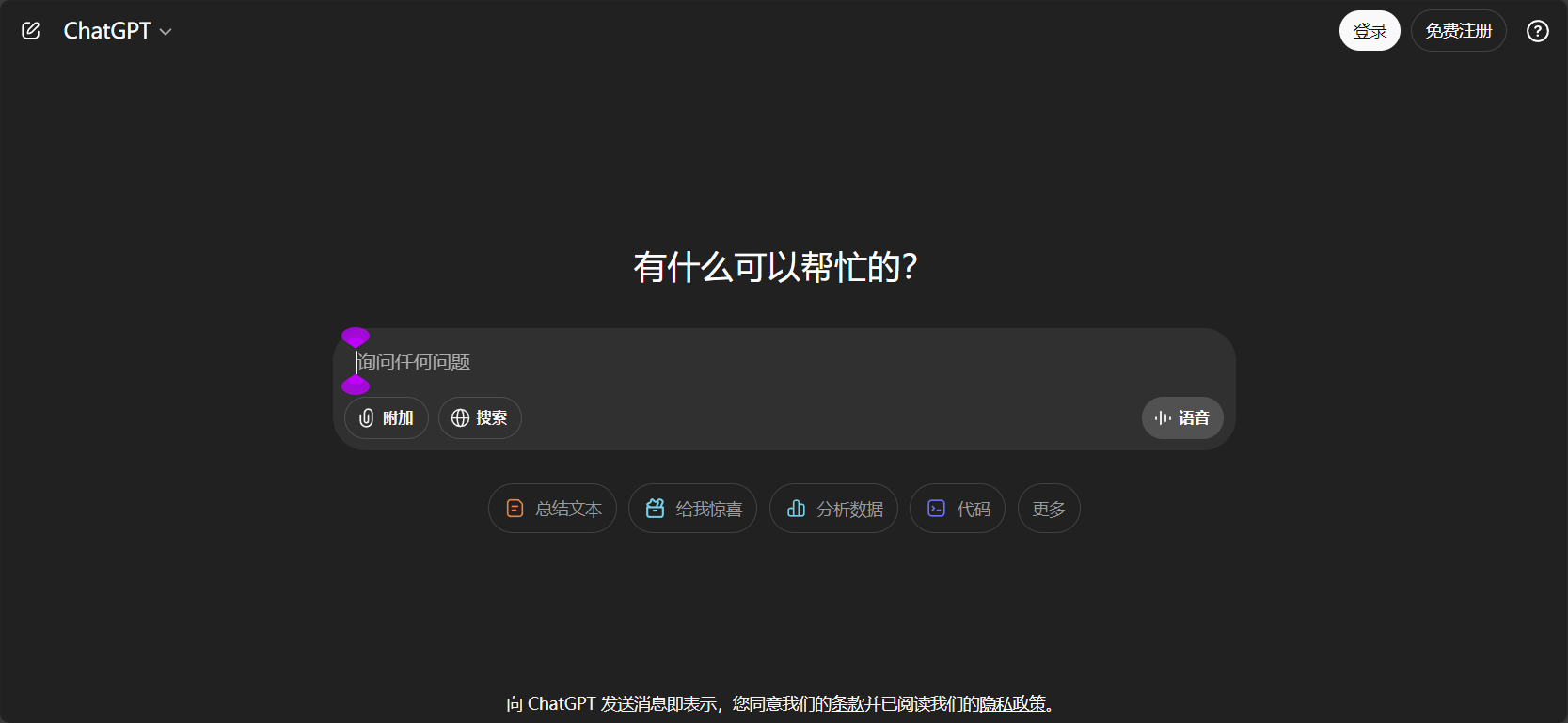
Text-based applications
- AI conversational assistant/automatic writingChatGPT and Gemini can automate conversations, writing, summarizing, translating, and answering basic questions. Businesses often use them to write press releases, work reports, automate email replies, and plan content.
- Code generation and software development:GitHub Copilot、Amazon CodeWhispererProducts like these have significantly improved developer productivity, automatically generating and completing code, and even detecting bugs.
- Content Summary and Document ProcessingAI can automatically compress long texts into summaries, widely used for document retrieval and interpretation in industries such as finance, law, and healthcare. Well-known tools include... Notion AI。
Graphics and image applications
- AI art/illustration/advertising industryArtists and content creators can use tools such as Midjourney and Stable Diffusion to automatically generate creative illustrations, comics, product posters, etc.
- E-commerce and advertising photography:Adobe Firefly It can assist advertising companies in creating commercial backgrounds, details, or changing the style of backgrounds for products, thereby reducing shooting costs.
- 3D designAI-assisted 3D model generation is becoming increasingly popular in fields such as game development and home design.
| Application directions | Representative tools | Typical results and scenarios |
|---|---|---|
| Writing/Report | ChatGPT, Gemini | Quick marketing copywriting, scripts, user manuals |
| Poster/Illustration | Stable Diffusion, Firefly | Commercial promotion, viral images |
| Code development | Copilot, CodeWhisperer | Intelligent auto-completion, learning new frameworks |
| Video short film production | Runway, Sora | Creative short video generation content |

Voice and Audio Applications
- Speech recognition and synthesis:likeWhisper It allows for easy conversion between text and speech, improving the efficiency of subtitle generation, voice assistants, and other applications.
- AI music creation/dubbingAIs such as Soundful and Suno can automatically compose music or generate background music and human-like voices for content, and are assisting in the production of podcasts and short videos.
- Multimodal creationFor example, Sora's ability to directly "turn" text into video represents AI's evolution towards more imaginative content transformation.
Advantages and challenges of generative AI
Advantages
- Greatly improve content production efficiencyThis reduces the cost of manual editing and design.
- Liberating CreativityIt allows even non-professionals to easily convert text to images, images to text, and audio to text.
- Empowering the transformation of traditional industriesThis will accelerate the digital transformation of media, retail, product design and other fields.
- Mass production and personalized productionFor example, advertisements can automatically customize content for different groups of people, serving the needs of each individual.
challenge
- Data bias/copyright issuesModel training is prone to data bias, and attention must be paid to the use of protected content; compliance issues cannot be ignored.
- “"Illusion" and the authenticity of contentAI often generates factual errors or "fabricated" content, which needs to be verified by humans.
- High computational resource consumptionLarge-scale model training and inference require powerful computing capabilities, while ordinary enterprises need to rely on cloud services.
- Safety and ethical risksIssues such as deepfakes and inappropriate content regulation in multilingual environments urgently need attention.
- Industry application threshold and customization difficultyFor in-depth applications in specific fields (such as medicine and law), professional training and rigorous testing are still required.
Comparison Table of Generative AI Application Examples in Various Industries
| industry | Key application scenarios | Typical Products/Implementation Cases |
|---|---|---|
| Internet content | Automatic writing, script generation, and comment moderation | ChatGPTNotion AI |
| Retail & Marketing | Personalized advertising, product titles/descriptions, promotional copy | Firefly and Shopify Magic (AI-generated product descriptions) |
| Finance and Insurance | Risk analysis report, financial statement summary, automated customer service reply | BloombergGPT, ChatGPT |
| Medical Technology | Draft of diagnostic report, medical record summary, medical image analysis | DeepMind's MedPaLM and Stable Diffusion Medical Expansion |
| Education and Training | AI-powered essay correction, automated tutoring, and question bank generation. | ChatGPT, Khan Academy (AI Mentor) |
| Legal Services | Legal document drafts, case summaries, and intelligent Q&A | Harvey AI |
| Media/Entertainment | Script generation, storyboard, news summary, virtual anchor | Runway, Midjourney, Kuaishou virtual IP anchors |
| Autonomous driving/transportation | Scene data synthesis, route description, and in-vehicle dialogue | Waymo and Tesla voice assistant |

Future Outlook and Development Trends
- Multimodal AI will become mainstreamText, images, audio and video, 3D design, etc. will be integrated into content generation.
- Customization and in-depth cultivation of vertical industriesSpecialized "industry-specific AI models" will emerge across various sectors to support compliance, security, and professional needs.
- AI tool platformizationUsers are increasingly embedding generative AI into their own products, services, and workflows through APIs or plugins.
- Increased emphasis on privacy and data securityMore companies are focusing on zero-shot training and local private large models to avoid data leakage for enterprises and customers.
- Deep collaboration between humans and AI"Human-machine co-creation" will become a new standard for productivity, and the focus of human work will shift to creativity and high-level decision-making.
Driven by the digital waveGenerative AI will continue to shape our production and lifestyles.It is both a powerful new tool for content innovation and a crucial growth engine for enterprise digital transformation. Faced with the opportunities and risks it brings, every individual and every enterprise should actively explore generative AI products, carefully manage ethical and compliance risks, and contribute to the creative revolution of this era.
© Copyright notes
The copyright of the article belongs to the author, please do not reprint without permission.
Related posts


No comments...